Hydrochloric Acid → 9-Carboxyfluorene
Reaction equation

[CH:1]1[C:13]2[CH2:12][C:11]3[C:6](=[CH:7][CH:8]=[CH:9][CH:10]=3)[C:5]=2[CH:4]=[CH:3][CH:2]=1.[C:14](=O)([O:18]CC)[O:15]CC.CC[O-].[K+].Cl>O>[CH:1]1[C:13]2[CH:12]([C:14]([OH:18])=[O:15])[C:11]3[C:6](=[CH:7][CH:8]=[CH:9][CH:10]=3)[C:5]=2[CH:4]=[CH:3][CH:2]=1Participants
6
Reactant 4


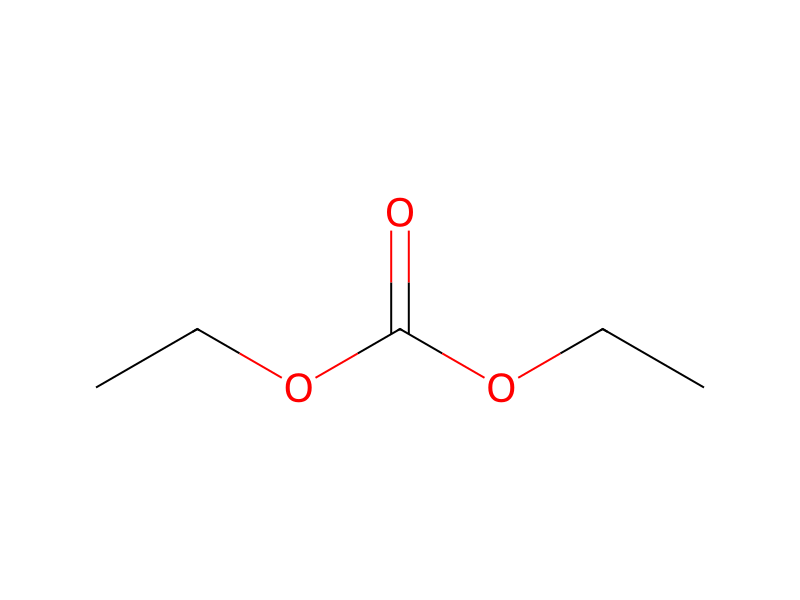

Product 1

Reagents, catalysts & solvents 1

Conditions
- Temperature
- 20 °C
Procedure
A solution of 332 g (1.9 moles) of fluorene and 974 g (8.2 moles) of diethyl carbonate was added with cooling to keep the temperature no higher than 40° C. to a mixture of 584 g (4.6 moles) of diethyl carbonate and 186 g (2.2 moles) of potassium ethylate in a reaction vessel and the mixture was stirred at 65°-70° C. for 5 hours and was cooled to 20° C. The mixture was slowly poured into a solution of 220 g (2.2 moles) of hydrochloric acid and 500 g of water with cooling to keep the temperature at a maximum of 40° C. The product was then treated as in Example 1 to obtain 280 g of fluorene-9-carboxylic acid in the form of light-beige crystals melting at 227°-229° C. (72.7% yield based on fluorene).
Workup
- temperaturewith cooling
- customno higher than 40° C.
- temperaturewith cooling
- customat a maximum of 40° C
- additionThe product was then treated as in Example 1
Sources & evidence
- ORD record
- ord-e5e262d3afdf48ffabfaeb8d477ac10b
- Source dataset
- uspto-grants-1986_01
- Patent number
- US04564700
Reaction notes
Loading…