Isopropanol → 1-(3'-Chloropropyl)-1,2,3,4-tetrahydro-beta-carboline hydrochloride
Reaction equation

[Cl:1]CCCC=O.[Cl:7][CH2:8][CH2:9][CH2:10][C:11](Cl)=O.Cl.[NH2:15][CH2:16][CH2:17][C:18]1[C:26]2[C:21](=[CH:22][CH:23]=[CH:24][CH:25]=2)[NH:20][CH:19]=1.C(O)(C)C>C1(C)C(C)=CC=CC=1>[ClH:1].[Cl:7][CH2:8][CH2:9][CH2:10][CH:11]1[C:19]2[NH:20][C:21]3[C:26](=[CH:25][CH:24]=[CH:23][CH:22]=3)[C:18]=2[CH2:17][CH2:16][NH:15]1Participants
6


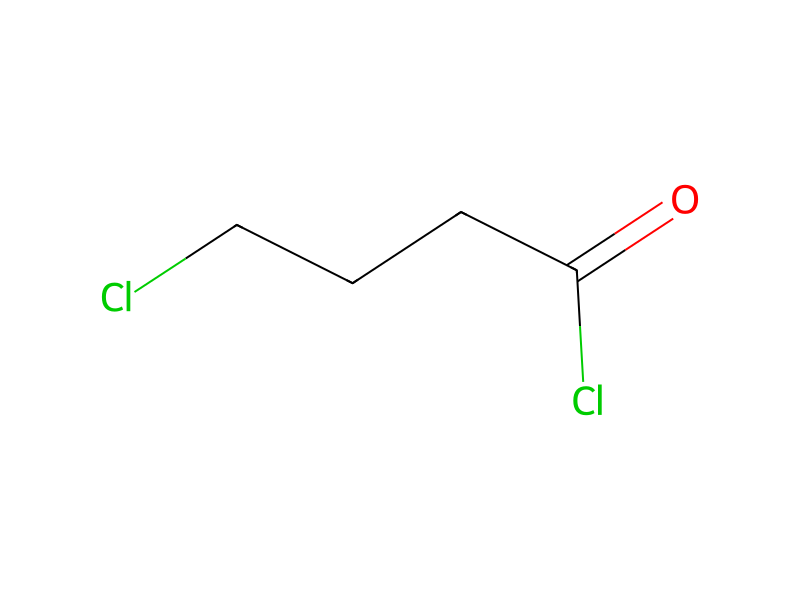



Conditions
- Temperature
- 88 °C
Procedure
1,280 parts of a 20.7% strength by weight solution of γ-chlorobutyraldehyde in xylene (prepared by a method similar to that described in Houben-Weyl, Volume 7/1, pages 285-290, by catalytic hydrogenation of a solution of γ-chlorobutyric acid chloride in xylene), 490 parts of 3-(β-aminoethyl)-indole hydrochloride and 1,000 parts of isopropanol were stirred for 4 hours at 88° C., and the mixture was cooled and then filtered under suction to give 618 parts (87%) of 1-(γ-chloropropyl)-1,2,3,4-tetrahydro-β-carboline hydrochloride. After recrystallization from methanol, the substance had a melting point of 219°-221° C.
Workup
- temperaturethe mixture was cooled
- filtrationfiltered under suction
Sources & evidence
- ORD record
- ord-fc11bb30c8e44d4888489ad31c21d813
- Source dataset
- uspto-grants-1986_01
- Patent number
- US04565870
Reaction notes
Loading…