Picolinic acid → HCID 69783089, compound
Reaction equation

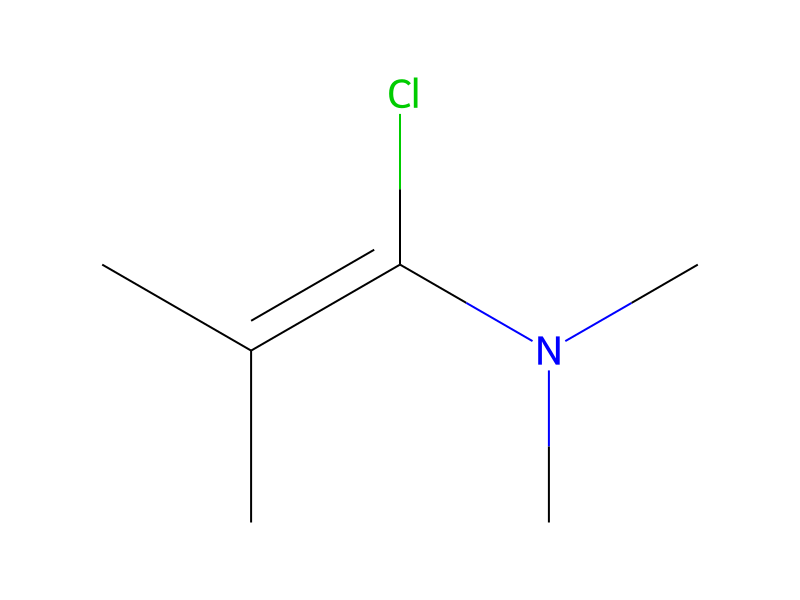
[N:1]1[CH:6]=[CH:5][CH:4]=[CH:3][C:2]=1[C:7]([OH:9])=[O:8].ClC(N(C)C)=C(C)C.O[C@H:19]([C@@H:37]([NH:45][C:46]([O:48][C:49]([CH3:52])([CH3:51])[CH3:50])=[O:47])[CH2:38][C:39]1[CH:44]=[CH:43][CH:42]=[CH:41][CH:40]=1)[CH2:20][N:21]([CH2:30][CH:31]1[CH2:36][CH2:35][CH2:34][CH2:33][CH2:32]1)[NH:22][C:23]([O:25][C:26]([CH3:29])([CH3:28])[CH3:27])=[O:24].N1C=CC=CC=1C(Cl)=O>C(Cl)Cl.CN(C1C=CN=CC=1)C.N1C=CC=CC=1.C1COCC1>[N:1]1[CH:6]=[CH:5][CH:4]=[CH:3][C:2]=1[C:7]([O:9][C@H:19]([C@@H:37]([NH:45][C:46]([O:48][C:49]([CH3:52])([CH3:51])[CH3:50])=[O:47])[CH2:38][C:39]1[CH:40]=[CH:41][CH:42]=[CH:43][CH:44]=1)[CH2:20][N:21]([CH2:30][CH:31]1[CH2:36][CH2:35][CH2:34][CH2:33][CH2:32]1)[NH:22][C:23]([O:25][C:26]([CH3:29])([CH3:27])[CH3:28])=[O:24])=[O:8]Participants
Reactant 4



Product 1

Reagents, catalysts & solvents 4




Procedure
At 0° C. under a nitrogen atmosphere, 500 mg (4.07 mmol) of picolinic acid (Fluka; Buchs/Switzerland) in 25 ml of methylene chloride are converted into the acid chloride with 0.57 ml (4.07 mmol) of 1-chloro-N,N,2-trimethyl-1-propenamine [B. Haveaux, A. Dekoker, M. Rens, A. R. Sidani, J. Toye, L. Ghosez, M. Murakami, M. Yoshioka, and W. Nagata, Organic Syntheses 59, 26 (1980)]. After 45 min, 10 ml of THF, 8.3 ml of pyridine, 10 mg of DMAP and 1.00 g (2.03 mmol) of 1-[2(S)-hydroxy-3(S)-(tert-butoxycarbonyl)amino-4-phenyl-butyl]-1-[cyclohexylmethyl]-2-(tert-butoxycarbonyl)-hydrazine (=Boc-[PheNNCha]-Boc, Example 4) are added and the mixture is stirred for 16 h at RT. Since according to HPLC there is still 1-[2(S)-hydroxy-3(S)-(tert-butoxycarbonyl)amino-4-phenyl-butyl]-1-[cyclohexylmethyl]-2-[tert-butoxycarbonyl]-hydrazine present in the reaction mixture, a further 2 equivalents of picolinic acid chloride (prepared as described above) dissolved in 20 ml of methylene chloride are added. After 18 h at RT the mixture is diluted with methylene chloride and washed twice with saturated NaHCO3 solution, water and brine, and the organic phases are extracted with 2 portions of methylene chloride, dried with Na2SO4 and concentrated by evaporation. The brown residue is dissolved in methylene chloride/ethyl acetate, 10 g of silica gel are added and the mixture is concentrated by evaporation. The resulting powder is applied to a silica gel column (hexane/ethyl acetate 1:1). Elution with hexane/ethyl acetate 1:1 yields the title compound: TLC Rf (N)=0.17; tRet (V)=19.9 min; 1H-NMR (200 MHz, CD3OD): 0.6-1.85 (m, 11H, cyclohexyl), 1.36 and 1.40 (2 s, 18H, 2 Boc), 2.4-3.1 (m, 6H), 4.28 (m, 1H), 5.28 (m, 2H), 7.1-7.3 (m, 5H), 7.72 (m, 1H), 8.08 (m, 1H), 8.28 (d, J=7 Hz, 1H), 8.75 (d, J=5 Hz, 1H).
Workup
- customAt 0° C.
- additionare added
- washwashed twice with saturated NaHCO3 solution, water and brine
- extractionthe organic phases are extracted with 2 portions of methylene chloride
- dry with materialdried with Na2SO4
- concentrationconcentrated by evaporation
- dissolutionThe brown residue is dissolved in methylene chloride/ethyl acetate
- addition10 g of silica gel are added
- concentrationthe mixture is concentrated by evaporation
- washElution with hexane/ethyl acetate 1:1
Sources & evidence
- ORD record
- ord-6d6bc6d84d314516aca27790ac8e9ba7
- Source dataset
- uspto-grants-1998_05
- Patent number
- US05753652
Reaction notes
Loading…