Triphenylphosphine → Benzyl 4-bromotetrahydro-1(2H)-pyridinecarboxylate
Reaction equation

CCOC(/N=N/C(OCC)=O)=O.C1(P(C2C=CC=CC=2)C2C=CC=CC=2)C=CC=CC=1.[Br-:32].[Li+].[CH2:34]([O:41][C:42]([N:44]1[CH2:49][CH2:48][CH:47](O)[CH2:46][CH2:45]1)=[O:43])[C:35]1[CH:40]=[CH:39][CH:38]=[CH:37][CH:36]=1>C1COCC1>[CH2:34]([O:41][C:42]([N:44]1[CH2:49][CH2:48][CH:47]([Br:32])[CH2:46][CH2:45]1)=[O:43])[C:35]1[CH:40]=[CH:39][CH:38]=[CH:37][CH:36]=1Participants

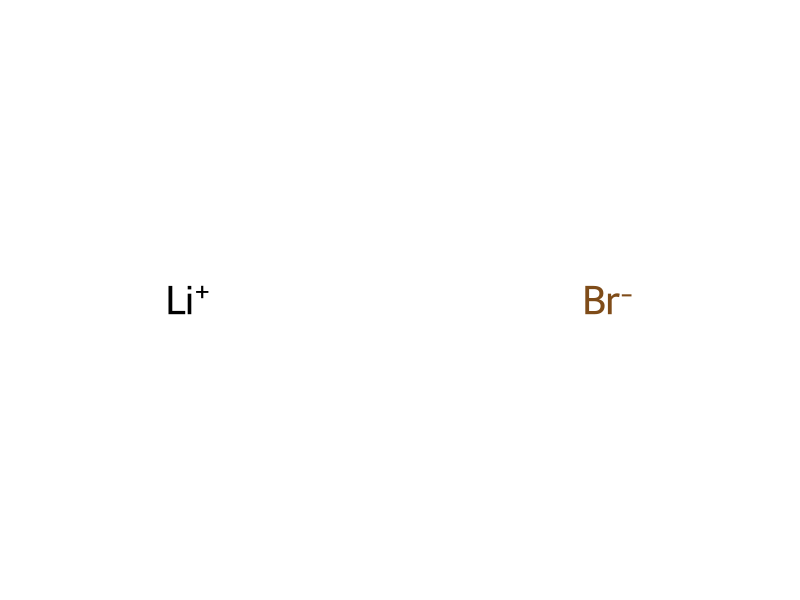




Procedure
Diethylazodicarboxylate (24.6 ml) was added dropwise to a stirred solution of triphenylphosphine (39.3 g) in THF (120 ml) at 0° C. under argon. The mixture was stirred for 20 minutes, then treated sequentially with lithium bromide (26.1 g) and a solution of 1-benzyloxycarbonylpiperidine-4-ol (7.1 g) in THF (50 ml). The mixture was allowed to warm to room temperature and stirring was continued for 1 hour. The mixture was concentrated, the residue treated with ether (100 ml) and silica (60 ml), and the solvent was evaporated under reduced pressure. The resulting powder was added to the top of a flash column and the column was eluted with hexane/ether (4:1) to give 1-benzyloxycarbonyl-4-bromopiperidine (3.6 g) as a colourless oil. NMR: (CDCl3): δ, 1.8-2.0(2H,m); 2.0-2.2(2H,m); 3.3-3.5(2H,m); 3.6-3.8(2H,m); 4.35(1H,m); 5.1(2H,s); 7.3(5H,m). m/e 298/300(M+H)+ ; 320/322(M+Na)+.
Workup
- stirringstirring
- waitwas continued for 1 hour
- concentrationThe mixture was concentrated
- additionthe residue treated with ether (100 ml) and silica (60 ml)
- customthe solvent was evaporated under reduced pressure
- additionThe resulting powder was added to the top of a flash column
- washthe column was eluted with hexane/ether (4:1)
Sources & evidence
- ORD record
- ord-ba5939c761b74a1092133e9377e6ea2e
- Source dataset
- uspto-grants-1998_05
- Patent number
- US05753659
Reaction notes
Loading…