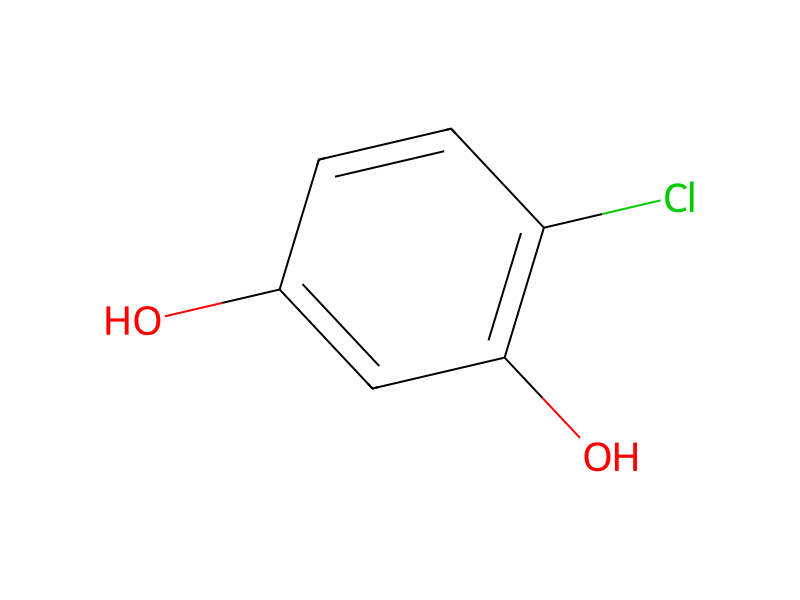
4-Chlororesorcinol → HCID 58913641, compound
Reaction equation

[Cl:1][C:2]1[CH:8]=[CH:7][C:5]([OH:6])=[CH:4][C:3]=1[OH:9].[F:10][CH2:11][CH2:12][O:13][C:14]1[CH:15]=[C:16]([CH2:20][C:21]([OH:23])=O)[CH:17]=[CH:18][CH:19]=1.P(Cl)(Cl)(Cl)(Cl)Cl.[CH3:30]N(C=O)C>>[Cl:1][C:2]1[CH:8]=[C:7]2[C:5](=[CH:4][C:3]=1[OH:9])[O:6][CH:30]=[C:20]([C:16]1[CH:17]=[CH:18][CH:19]=[C:14]([O:13][CH2:12][CH2:11][F:10])[CH:15]=1)[C:21]2=[O:23]Participants
5



Procedure
This compounds was synthesised in the same manner as described above. 4-Chlororesorcinol (0.36 g, 2.5 mmol), [3-(2-Fluoro-ethoxy)-phenyl]-acetic acid (0.5 g, 2.5 mmol), BF3Et2O (5 ml), PCl5 (0.79 g, 3.79 mmol), DMF (8 ml and 5 ml). 6-Chloro-3-[3-(2-fluoro-ethoxy)-phenyl]-7-hydroxy-chromen-4-one precipitated out as a white solid (0.49 g, 58.6%). This was taken onto the next stage without further purification. Rf 0.6 ethyl acetate/hexane (70/30)].
Workup
- customThis compounds was synthesised in the same manner
- custom6-Chloro-3-[3-(2-fluoro-ethoxy)-phenyl]-7-hydroxy-chromen-4-one precipitated out as a white solid (0.49 g, 58.6%)
- customThis was taken onto the next stage without further purification
Sources & evidence
- ORD record
- ord-b6ec681cfaea4914b2681afe80183164
- Source dataset
- uspto-grants-2007_07
- Patent number
- US07247734B2
Reaction notes
Loading…