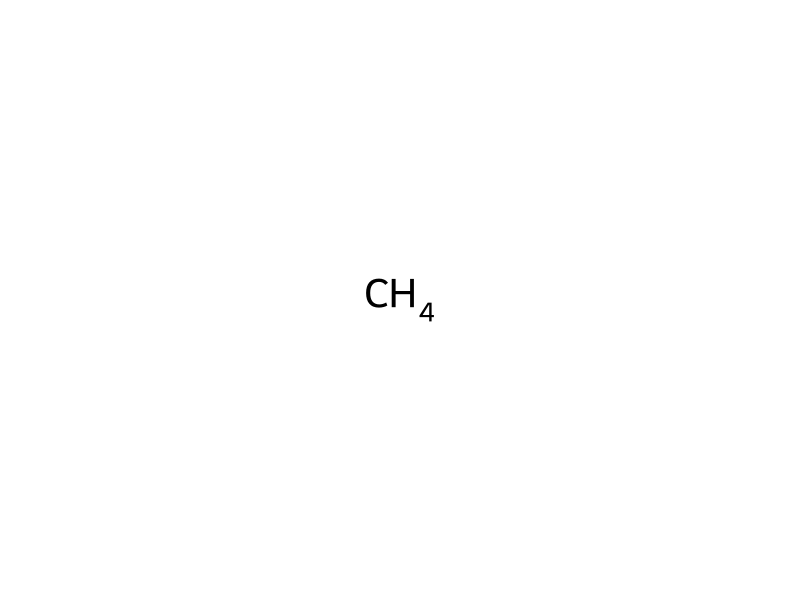
Methane → HCID 69197192, compound
Reaction equation

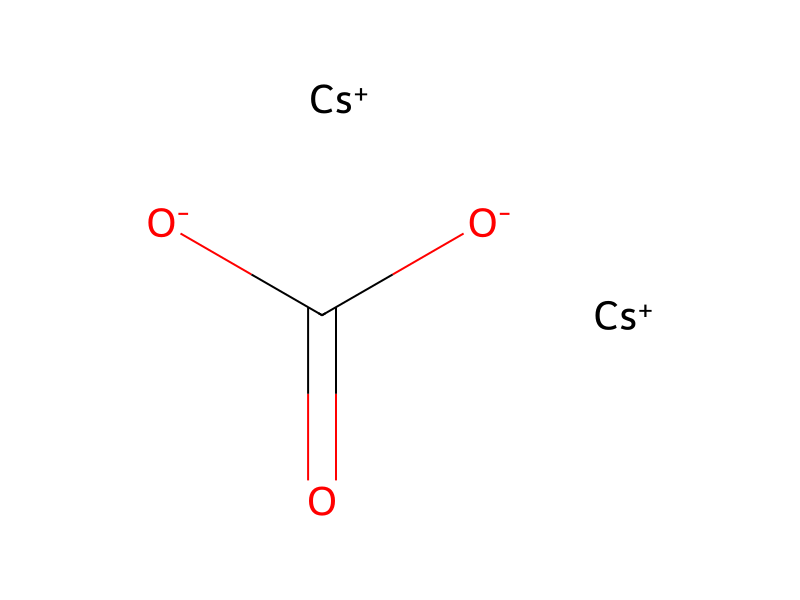
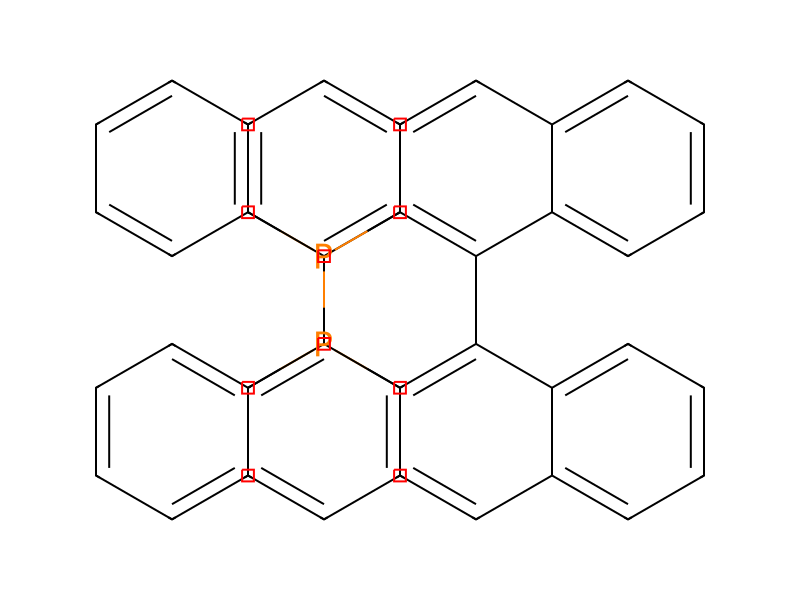
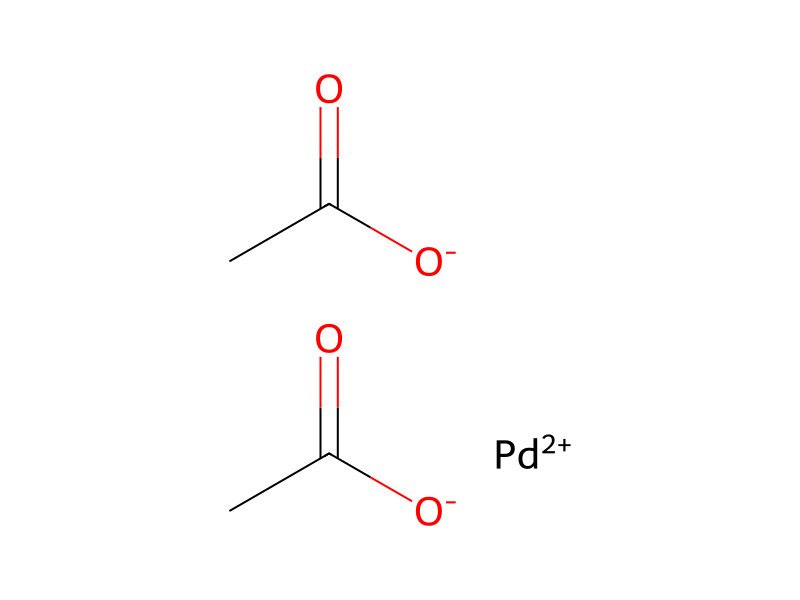
Br[C:2]1[CH:7]=[CH:6][C:5]([O:8][CH2:9][C:10]2[CH:15]=[CH:14][CH:13]=[CH:12][CH:11]=2)=[C:4]([N+:16]([O-:18])=[O:17])[CH:3]=1.[CH3:19][C@H:20]1[CH2:25][NH:24][CH2:23][C@@H:22]([CH3:26])[NH:21]1.C(=O)([O-])[O-].[Cs+].[Cs+].C1(P(C2C=CC=CC=2)C2C=CC3C(=CC=CC=3)C=2C2C3C(=CC=CC=3)C=CC=2P(C2C=CC=CC=2)C2C=CC=CC=2)C=CC=CC=1.C>O1CCOCC1.C([O-])(=O)C.[Pd+2].C([O-])(=O)C>[CH3:19][C@H:20]1[NH:21][C@@H:22]([CH3:26])[CH2:23][N:24]([C:2]2[CH:7]=[CH:6][C:5]([O:8][CH2:9][C:10]3[CH:15]=[CH:14][CH:13]=[CH:12][CH:11]=3)=[C:4]([N+:16]([O-:18])=[O:17])[CH:3]=2)[CH2:25]1Participants
Reactant 5


Product 1

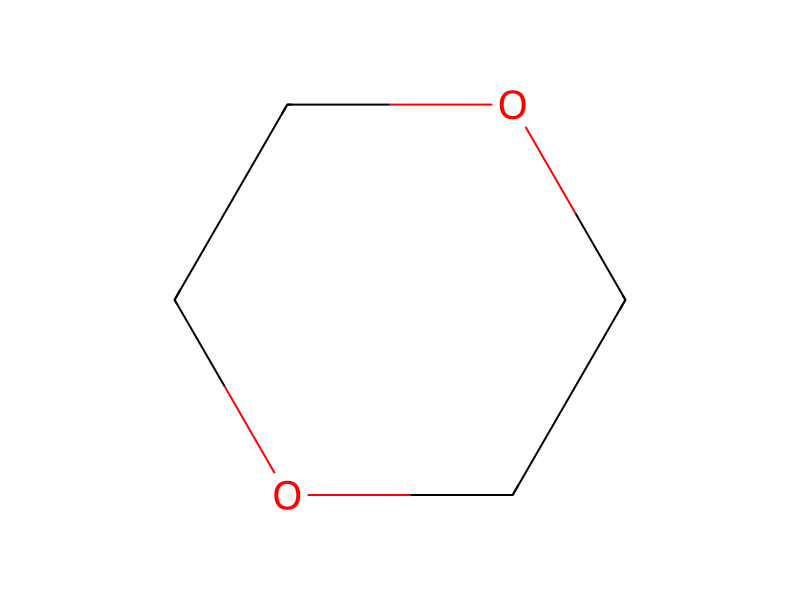
Reagents, catalysts & solvents 2
Conditions
- Temperature
- 100 °C
Procedure
To a solution of 4-bromo-2-nitro-1-[(phenylmethyl)oxy]benzene (7.0 g, 22.7 mmol) in dioxane (120 ml) was added cis-2,6-dimethylpiperazine (7.8 g, 67.4 mmol) followed by cesium carbonate (11.0 g, 33.8 mmol), rac-2,2′-bis(diphenylphosphino)-1,1′-binapthyl (2.1 g, 3.4 mmol) and palladium acetate (516 mg, 2.3 mmol). The resulting mixture was heated at 100° C. under an atmosphere of argon overnight. The mixture was allowed to cool, charcoal was added and the mixture stirred at room temperature for 30 minutes. The solids were then removed by filtration through celite and the residue washed with ethyl acetate. The filtrate was then reduced in vacuo and the residue dissolved in 2M aqueous hydrochloric acid and ethyl acetate added. A yellow solid formed that was immiscible in both phases so the mixture was filtered and the solid washed with ethyl acetate. The biphasic filtrate was then separated and the aqueous layer washed with more ethyl acetate. The aqueous was then basified with 0.880 ammonia and the yellow solid collected by filtration added. The resulting basified aqueous solution was then extracted with dichloromethane (×2) and the combined dichloromethane layers dried over anhydrous magnesium sulfate, filtered and reduced in vacuo. The residue was then purified by chromatography on silica gel (gradient 0 to 15% methanol in dichloromethane) to afford the title product. MS (ES+) m/e 342 [M+H]+.
Workup
- temperatureto cool
- customThe solids were then removed by filtration through celite
- washthe residue washed with ethyl acetate
- dissolutionthe residue dissolved in 2M aqueous hydrochloric acid
- additionethyl acetate added
- customA yellow solid formed that
- filtrationwas filtered
- washthe solid washed with ethyl acetate
- customThe biphasic filtrate was then separated
- washthe aqueous layer washed with more ethyl acetate
- filtrationthe yellow solid collected by filtration
- additionadded
- extractionThe resulting basified aqueous solution was then extracted with dichloromethane (×2)
- dry with materialthe combined dichloromethane layers dried over anhydrous magnesium sulfate
- filtrationfiltered
- customThe residue was then purified by chromatography on silica gel (gradient 0 to 15% methanol in dichloromethane)
Sources & evidence
- ORD record
- ord-9a581edf7b544b3683c928bf91a67bfa
- Source dataset
- uspto-grants-2008_06
- Patent number
- US07381728B2
Reaction notes
Loading…