Benzaldehyde → 4-allyl-benzonitrile
Reaction equation

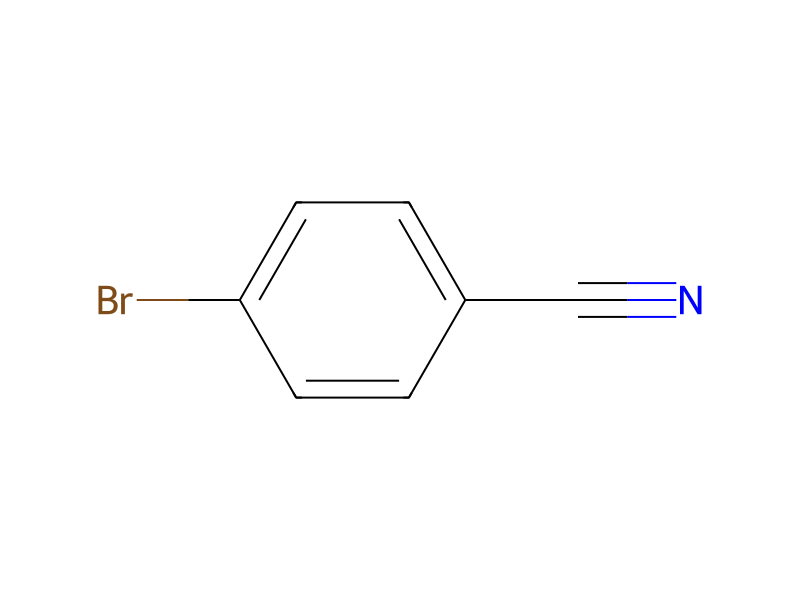
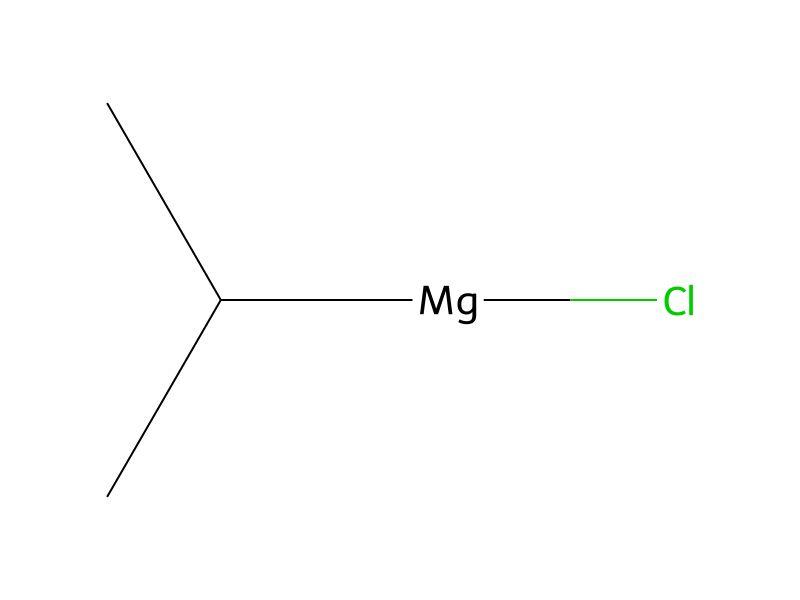
Br[C:2]1[CH:9]=[CH:8][C:5]([C:6]#[N:7])=[CH:4][CH:3]=1.[CH:10]([Mg]Cl)([CH3:12])[CH3:11].C(=O)C1C=CC=CC=1>C1COCC1>[CH2:12]([C:2]1[CH:9]=[CH:8][C:5]([C:6]#[N:7])=[CH:4][CH:3]=1)[CH:10]=[CH2:11]Participants
Reactant 3

Product 1

Reagents, catalysts & solvents 1

Procedure
Highly substituted chloro and methoxy aryl bromides can readily be converted into the desired Grignard reagents 3i, j. After the reaction with ClPPh2 and oxidative work-up, the phosphine oxides 2ia, ja are obtained in good yields (entry 15, 16). This type of compound is of interest in relation with P-ligands for asymmetric catalysis.[5] Also functions like a cyano group are tolerated. Thus, the reaction of 4-bromobenzonitrile in THF at −7° C. leads to the desired arylmagnesium reagent (3d) in only 50% conversion using i-PrMgCl whereas over 90% is observed with i-PrMgCl•LiCl (Scheme 3). The addition of benzaldehyde provides the alcohol 2da in 81% yield whereas allylation of arylmagnesium reagent (3d) with allyl bromide leads to the corresponding 4-allylbenzonitrile in 92% yield (entry 5,6 of Table 1). See FIG. 3 for additional information.
Workup
- customin good yields (entry 15, 16)
Sources & evidence
- ORD record
- ord-fab398e0dd934a349423ef525d99696d
- Source dataset
- uspto-grants-2008_06
- Patent number
- US07384580B2
Reaction notes
Loading…