Phosphoric Acid → 4-cyclopentylbenzene-1,3-diol
Reaction equation

[C:1]1([CH:8]=[CH:7][CH:6]=[C:4]([OH:5])[CH:3]=1)[OH:2].[CH:9]1(O)[CH2:13][CH2:12][CH2:11][CH2:10]1.P(=O)(O)(O)O>O.C(OCC)(=O)C>[CH:9]1([C:6]2[CH:7]=[CH:8][C:1]([OH:2])=[CH:3][C:4]=2[OH:5])[CH2:13][CH2:12][CH2:11][CH2:10]1Participants
Reactant 3

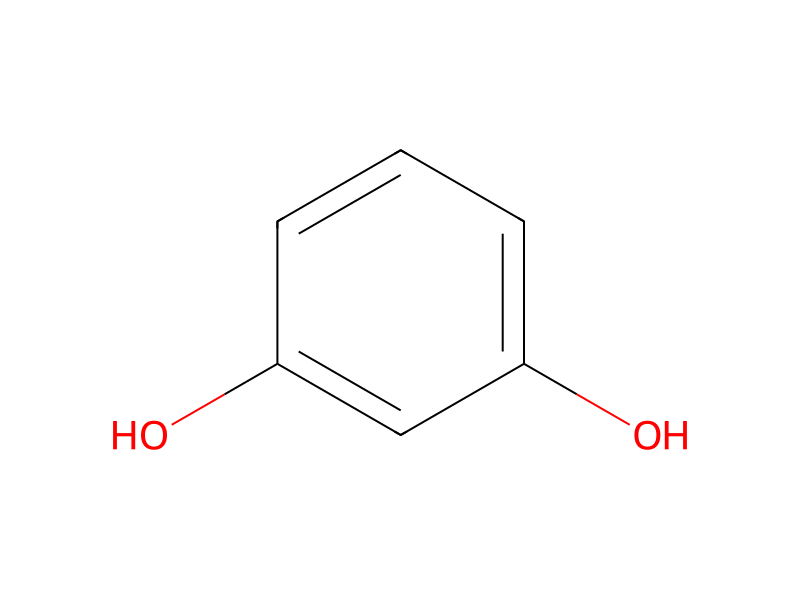
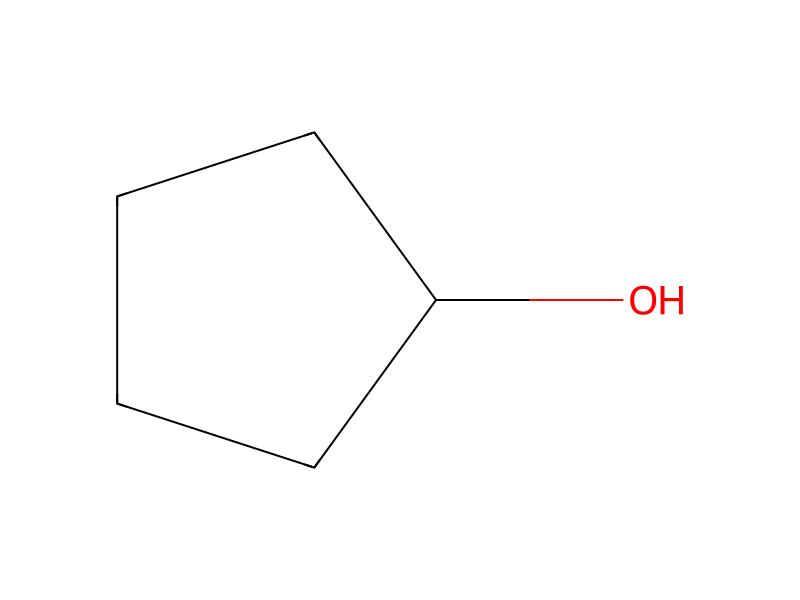
Product 1

Reagents, catalysts & solvents 2


Conditions
- Temperature
- 120 °C
Procedure
A round bottom flask equipped with stirrer bar was charged with resorcinol (150 g, 1.36 moles), cyclopentanol (125 ml, 1.38 moles) and phosphoric acid (85% in water) 500 ml. The flask was fitted with a reflux condenser, purged with nitrogen and the mixture heated at 120° C. (oil bath temperature) for 26 h. After this time, TLC analysis indicated that starting resorcinol was still present. Further cyclopentanol (25 ml, 0.28 moles) was added to the reaction mixture and heating continued for 2.5 hours. On cooling, the mixture was diluted with water (500 ml) and ethyl acetate (600 ml). The organic layer was separated, and the aqueous layer extracted with ethyl acetate (3×500 ml). The combined organic layers were neutralized by careful addition of an excess of saturated aqueous sodium hydrogen carbonate solution, washed with brine (300 ml), dried (magnesium sulfate) and concentrated. The residue was dissolved in toluene (500 ml) and water (20 ml, 1.11 moles, 0.8 eq) added. The solution was stirred for ca. 30 s and cooled in an ice/water batch with periodic stirring. After 4 h the solid was filtered and left to air dry in a crystallizing dish for 16 h to give colored crystals. Recrystallization in toluene afforded the monohydrate form of 4-cyclopentylresorcinol as white plates. An anhydrous toluene solution of 4-cyclopentylresorcinol was prepared via azeotropic distillation. The solution was cooled, and pentane added. Anhydrate A was obtained by filtration. MPt 65-66.5° C. Selected IR Data (υmax/cm−1): 1108.3 s, 1094.7 m, 977.8 s, 971.1 s, 930.4 w, 838.3 m, 826.7 s, 799.8 w, 748.1 w and 628.0 w.
Workup
- customA round bottom flask equipped with stirrer bar
- customThe flask was fitted with a reflux condenser
- custompurged with nitrogen
- temperatureheating
- temperatureOn cooling
- customThe organic layer was separated
- extractionthe aqueous layer extracted with ethyl acetate (3×500 ml)
- additionThe combined organic layers were neutralized by careful addition of an excess of saturated aqueous sodium hydrogen carbonate solution
- washwashed with brine (300 ml)
- dry with materialdried (magnesium sulfate)
- concentrationconcentrated
- dissolutionThe residue was dissolved in toluene (500 ml)
- filtrationAfter 4 h the solid was filtered
- waitleft to air
- customdry in a crystallizing dish for 16 h
- customto give colored crystals
- customRecrystallization in toluene
Sources & evidence
- ORD record
- ord-c7a1e369e8644c5d86a15dd5ede37344
- Source dataset
- uspto-grants-2008_06
- Patent number
- US07390838B2
Reaction notes
Loading…