Trifluoroacetic acid → 2-isopropyl-4H-3-thia-1,4,9-triazabenzo[f]azulene-10-ylamine hydrochloride
Reaction equation

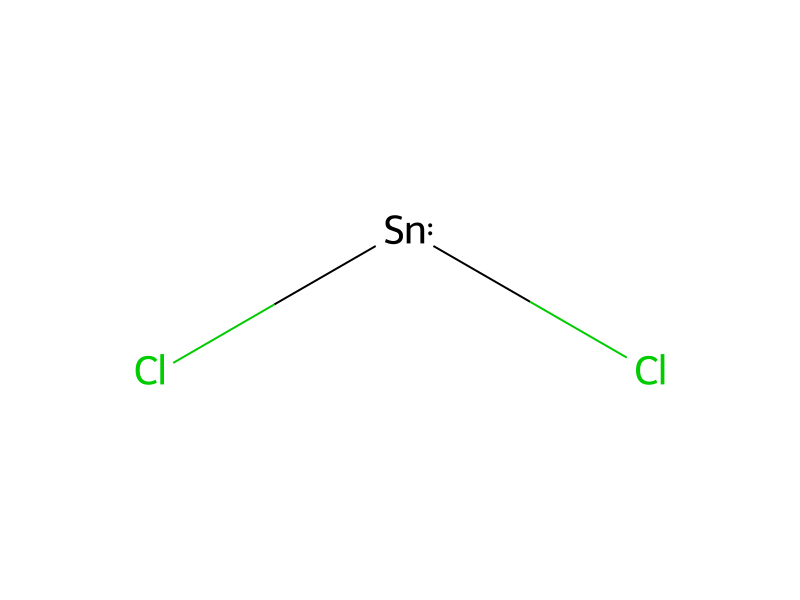
[CH:1]([C:4]1[S:5][C:6]([NH:11][C:12]2[CH:17]=[CH:16][CH:15]=[CH:14][C:13]=2[N+:18]([O-])=O)=[C:7]([C:9]#[N:10])[N:8]=1)([CH3:3])[CH3:2].[Cl:21][Sn]Cl.C(O)(C(F)(F)F)=O.[Sn]>Cl.O.C(#N)C.CC(O)C>[ClH:21].[CH:1]([C:4]1[S:5][C:6]2[NH:11][C:12]3[CH:17]=[CH:16][CH:15]=[CH:14][C:13]=3[N:18]=[C:9]([NH2:10])[C:7]=2[N:8]=1)([CH3:3])[CH3:2]Participants
Reactant 4



Product 1

Reagents, catalysts & solvents 4




Conditions
- Temperature
- 60 °C
Procedure
Combine 2-isopropyl-5-(2-nitro-phenylamino)-thiazole-4-carbonitrile (35.1 g, 122 mmol) and IPA (525 mL) stir under N2 and heat to 60° C. to dissolve. Add a solution of SnCl2 (70.0 g, 369 mmol, 3.0 eq.) in aqueous 5M HCl (525 mL) dropwise over 30 min. Heat the reaction mixture at reflux (80–85° C.) for 1 h until complete by HPLC (Zorbax SB C18 25 cm, 60:40/ACN:0.1% TFA in water, 233 nm, 1.0 mL/min). Cooling the reaction to 50° C. Remove most of the solvent in vacuo. Treat the aqueous solid residue (188 g) with IPA (500 mL) and heat to 60–70° C. for a few minutes to form a homogenous slurry. Cool the slurry to rt, then 0–5° C. for 1–2 h. Isolate the product by vacuum filtration and dry in a vacuum oven at 60° C. to afford 45.9 g (128%) of crude product that was heavily contaminated with residual tin. Suspent the crude product in aqueous 1N HCl (2.25 L) and heat to reflux (95° C.) for 1 h, during which time most of the solids dissolve. Cool to rt, isolate the product by vacuum filtration, rinse with aqueous 1N HCl, and dry in a vacuum oven at 70° C. to afford 34.5 g (97%) of the title compound as a yellow/orange solid. Analytical analysis: Sn (9.0%), H2O (1.2%). 1H NMR (300 MHz, DMSO-d6) δ 10.96 (bs, 1H), 10.15 (bs, 1H), 8.94 (bs, 2H), 7.10–6.95 (m, 2H), 6.93–6.82 (m, 2H), 3.10 (dq, 1H, J=6.95 Hz), 1.28 (s, 3H), 1.26 (s, 3H). 13C NMR (75 MHz, DMSO-d6) δ 164.42, 159.24, 158.94, 137.01, 128.58, 127.11, 125.09, 122.87, 120.14, 119.23, 32.41, 21.98(2). IR(KBr) 3301, 3249, 2964, 1653, 1614, 1553, 1509 cm−1. HRMS (ES) M/z calculated for C13H15N4S 259.1017 (M+−Cl), found 259.1010.
Workup
- dissolutionto dissolve
- temperatureHeat the reaction mixture
- temperatureCooling
- customthe reaction to 50° C
- customRemove most of the solvent in vacuo
- additionTreat the aqueous solid residue (188 g) with IPA (500 mL)
- temperatureheat to 60–70° C. for a few minutes
- customto form a homogenous slurry
- temperatureCool the slurry to rt
- wait0–5° C. for 1–2 h
- customIsolate the product
- filtrationby vacuum filtration
- customdry in a vacuum oven at 60° C.
- customto afford 45.9 g (128%) of crude product that
- temperatureto reflux (95° C.) for 1 h
- dissolutionduring which time most of the solids dissolve
- temperatureCool to rt
- customisolate the product
- filtrationby vacuum filtration
- washrinse with aqueous 1N HCl
- customdry in a vacuum oven at 70° C.
Sources & evidence
- ORD record
- ord-d9d627aa17584d1cbf661e2bb08d2439
- Source dataset
- uspto-grants-2007_05
- Patent number
- US07214673B2
Reaction notes
Loading…