Hydrochloric Acid → N-benzyl-3-pyrrolidinol
Reaction equation

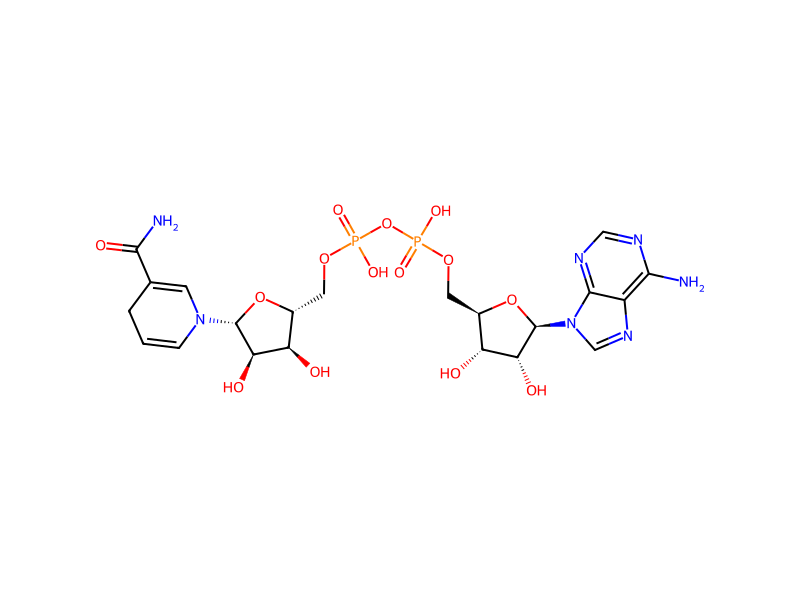
O=C[C@@H]([C@H]([C@@H]([C@@H](CO)O)O)O)O.C1N=C(N)C2N=CN([C@@H]3O[C@H](COP(OP(OC[C@H]4O[C@@H](N5C=C(C(N)=O)CC=C5)[C@H](O)[C@@H]4O)(O)=O)(O)=O)[C@@H](O)[C@H]3O)C=2N=1.[CH2:57]([N:64]1[CH2:68][CH2:67][C:66](=[O:69])[CH2:65]1)[C:58]1[CH:63]=[CH:62][CH:61]=[CH:60][CH:59]=1.Cl.[OH-].[Na+]>>[CH2:57]([N:64]1[CH2:68][CH2:67][CH:66]([OH:69])[CH2:65]1)[C:58]1[CH:59]=[CH:60][CH:61]=[CH:62][CH:63]=1Participants





Conditions
- Temperature
- 30 °C
Procedure
The culture of the recombinant Escherichia coli HB101(pNTDRG1) as obtained in Example 8 was subjected to ultrasonic cell disruption using SONIFIRE 250 (product of BRANSON). To 20 ml of this cell disruption fluid, there were added 2 g of glucose, 1 mg of NAD and 1 g of N-benzyl-3-pyrrolidinone. This reaction mixture was stirred at 30° C. for 18 hours under a nitrogen atmosphere while adjusting the pH to 6.5 by adding 5 M hydrochloric acid and sodium hydroxide solution. After completion of the reaction, 2 ml of 5 M sodium hydroxide solution was added, and this reaction mixture was extracted with toluene. The solvent was then removed from the extract by an evaporator, and the extract was analyzed. Then, N-benzyl-3-pyrrolidinol was obtained in 96% yield. The N-benzyl-3-pyrrolidinol formed on that occasion was the R form with an optical purity of 99.9% ee.
Workup
- customas obtained in Example 8
- additionwas added
- extractionthis reaction mixture was extracted with toluene
- customThe solvent was then removed from the
- extractionextract by an evaporator
Sources & evidence
- ORD record
- ord-c3a069c483254478bd52c2c0462b19b2
- Source dataset
- uspto-grants-2007_05
- Patent number
- US07220564B2
Reaction notes
Loading…