Triethylamine → 3-chloro-1-(2,3-dihydro-1H-indol-1-yl)propan-1-one
Reaction equation

[NH:1]1[C:9]2[C:4](=[CH:5][CH:6]=[CH:7][CH:8]=2)[CH2:3][CH2:2]1.C(N(CC)CC)C.[Cl:17][CH2:18][CH2:19][C:20](Cl)=[O:21]>O1CCCC1>[Cl:17][CH2:18][CH2:19][C:20]([N:1]1[C:9]2[C:4](=[CH:5][CH:6]=[CH:7][CH:8]=2)[CH2:3][CH2:2]1)=[O:21]Participants
5
Reactant 3

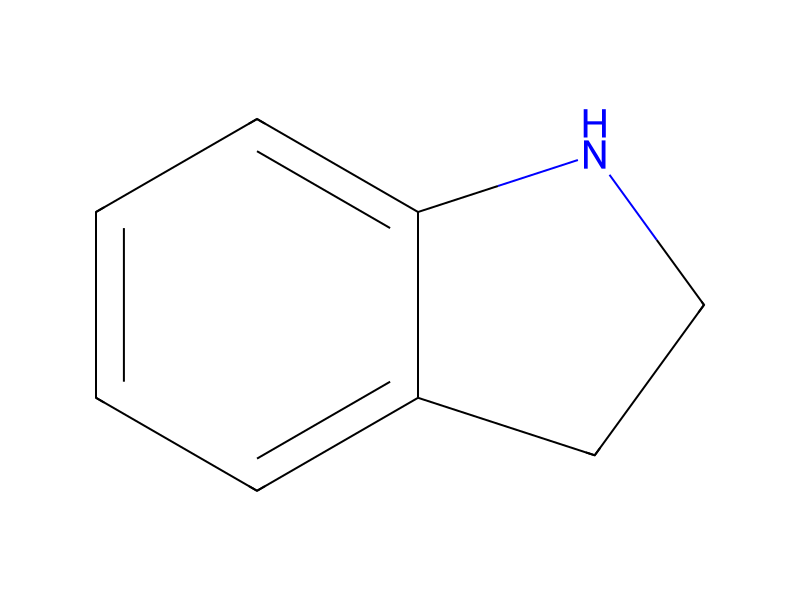

Product 1

Reagents, catalysts & solvents 1

Conditions
- Temperature
- 10 °C
Procedure
A mixture of 2,3-dihydro-1H-indole (50 g), triethylamine (132 g) and tetrahydrofuran (1000 mL) was cooled down to 10° C. followed by the addition (over a period of 60 min) of a solution of 3-chloropropanoyl chloride (55 g) in tetrahydrofuran (400 mL). The mixture was filtered, and the remaining solution was evaporated in vacuo to dryness. The residue was purified by flash chromatography (eluent: ethyl acetate/heptane 1:3) giving the title compound as a crystalline white material (31 g).
Workup
- filtrationThe mixture was filtered
- customthe remaining solution was evaporated in vacuo to dryness
- customThe residue was purified by flash chromatography (eluent: ethyl acetate/heptane 1:3)
Sources & evidence
- ORD record
- ord-78821417ee3743bd976f9b2cc3931b2f
- Source dataset
- uspto-grants-2007_05
- Patent number
- US07223765B2
Reaction notes
Loading…