Hydrochloric Acid → HCID 178420020, compound
Reaction equation

[O:1]1[CH2:5][CH2:4][O:3][CH:2]1[C:6]1[CH:13]=[CH:12][C:9]([C:10]#[N:11])=[CH:8][CH:7]=1.[N-:14]=[N+:15]=[N-:16].[Na+].Cl.C(N(CC)CC)C.Cl>O.CN1CCCC1=O>[O:1]1[CH2:5][CH2:4][O:3][CH:2]1[C:6]1[CH:13]=[CH:12][C:9]([C:10]2[NH:16][N:15]=[N:14][N:11]=2)=[CH:8][CH:7]=1Participants
7

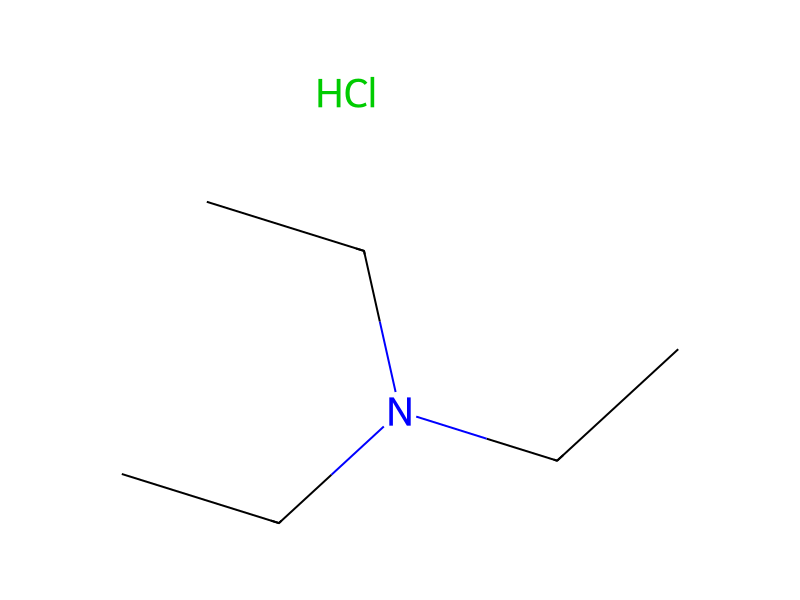





Conditions
- Temperature
- 150 °C
Procedure
A mixture of 4-(1,3-dioxolan-2-yl)benzonitrile (1.0 g), sodium azide (1.48 g), triethylamine hydrochloride (1.18 g) and 1-methyl-2-pyrrolidinone (50 ml) was stirred at 150° C. for 3 hrs. After cooling, 1 M hydrochloric acid and water were added to the reaction mixture to adjust to pH=3 to 4. The mixture was extracted with ethyl acetate. The organic layer was washed with water and saturated brine, dried over anhydrous magnesium sulfate and concentrated. The residue was recrystallized from ethyl acetate to give 5-[4-(1,3-dioxolan-2-yl)phenyl]-1H-tetrazole (0.300 g, yield 24%) as brown prism crystals. melting point: 197–199° C. (decomposition).
Workup
- temperatureAfter cooling
- extractionThe mixture was extracted with ethyl acetate
- washThe organic layer was washed with water and saturated brine
- dry with materialdried over anhydrous magnesium sulfate
- concentrationconcentrated
- customThe residue was recrystallized from ethyl acetate
Sources & evidence
- ORD record
- ord-41c564ea45344a7690b3d0ee8556593d
- Source dataset
- uspto-grants-2007_05
- Patent number
- US07223791B2
Reaction notes
Loading…