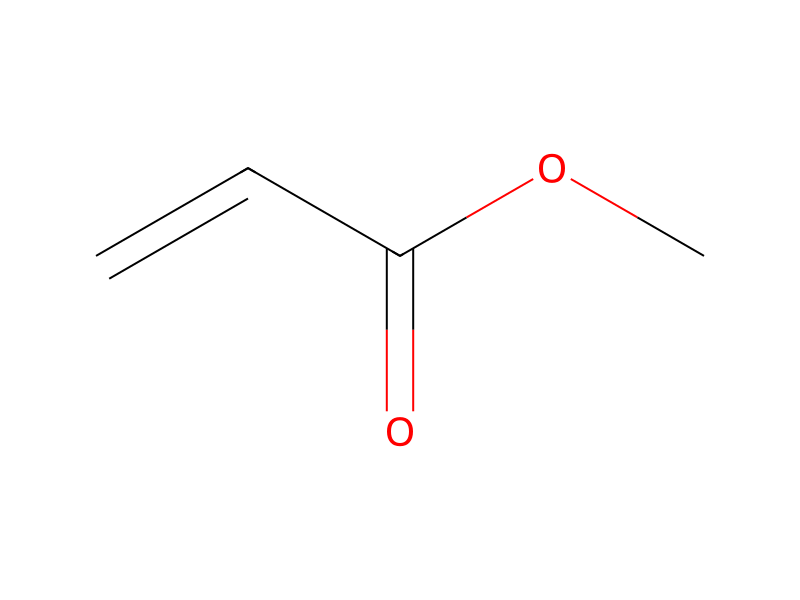
Methyl Acrylate → Methyl 2-(p-chlorophenyl)-5-(trifluoromethyl)pyrrole-3-carboxylate
Reaction equation

Cl[CH:2]([N:7]=[C:8](Cl)[C:9]1[CH:14]=[CH:13][C:12]([Cl:15])=[CH:11][CH:10]=1)[C:3]([F:6])([F:5])[F:4].[C:17]([O:21][CH3:22])(=[O:20])[CH:18]=[CH2:19].N12CCCN=C1CCCCC2>CN(C)C=O>[Cl:15][C:12]1[CH:13]=[CH:14][C:9]([C:8]2[NH:7][C:2]([C:3]([F:6])([F:5])[F:4])=[CH:19][C:18]=2[C:17]([O:21][CH3:22])=[O:20])=[CH:10][CH:11]=1Participants
5
Reactant 3


Product 1

Reagents, catalysts & solvents 1

Procedure
A solution of N-[1-chloro-(2,2,2-trifluoroethyl)]-4-chlorobenzimidoyl chloride (3.40 g, 0.012 mol) and methyl acrylate (1.26 g, 0.015 mol) in N,N-dimethylformamide (10 mL) is treated with 1,8-diazabicyclo[5.4.0]undec-7-ene (DBU, 5.0 g, 0.033 mol) over 1 hour. The reaction mixture is then held at 60° C. for 15 minutes, quenched with dilute HCl, and extracted with ethyl acetate. The organic extract is concentrated in vacuo to obtain a residue. Flash chromatography of the residue on silica gel, packed and eluted with 20% ethyl acetate in heptane, and crystallization from heptane gives the title product as a yellow solid (0.95 g, 26.0% yield) which is identified by 1H and 19F NMR spectral analyses.
Workup
- customquenched with dilute HCl
- extractionextracted with ethyl acetate
- extractionThe organic extract
- concentrationis concentrated in vacuo
- customto obtain a residue
- washeluted with 20% ethyl acetate in heptane, and crystallization from heptane
Sources & evidence
- ORD record
- ord-f23f5f8ef40d4e5baf10e86b10e58473
- Source dataset
- uspto-grants-2003_07
- Patent number
- US06596902B2
Reaction notes
Loading…