1,2-Dichloroethane → (S)-2-cyclopropylcarbamoyl-pyrrolidine-1-carboxylic acid benzyl ester
Reaction equation

[C:1]([N:11]1[CH2:18][CH2:17][CH2:16][C@H:12]1[C:13]([OH:15])=O)([O:3][CH2:4][C:5]1[CH:10]=[CH:9][CH:8]=[CH:7][CH:6]=1)=[O:2].[CH:19]1([NH2:22])[CH2:21][CH2:20]1.C1C=CC2N(O)N=NC=2C=1.C(Cl)CCl>CN(C=O)C>[CH2:4]([O:3][C:1]([N:11]1[CH2:18][CH2:17][CH2:16][C@H:12]1[C:13](=[O:15])[NH:22][CH:19]1[CH2:21][CH2:20]1)=[O:2])[C:5]1[CH:6]=[CH:7][CH:8]=[CH:9][CH:10]=1Participants
6



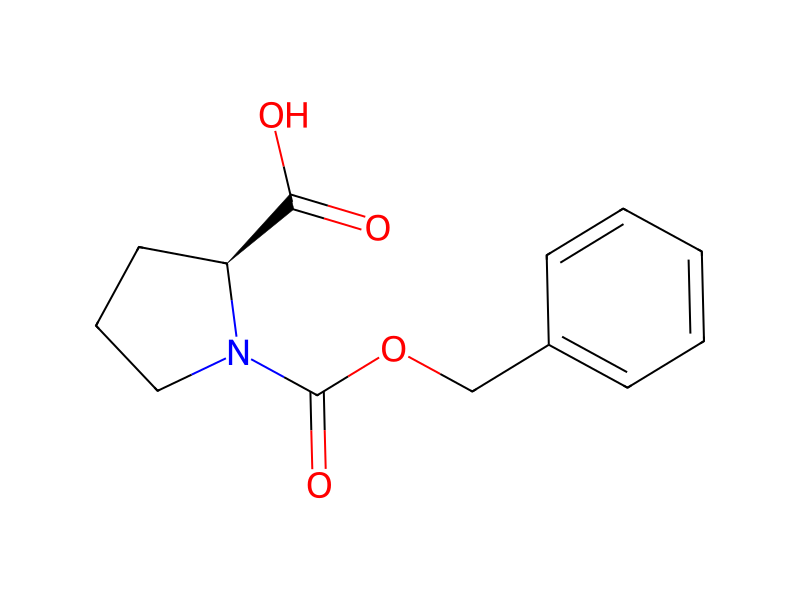


Procedure
A mixture of carbobenzyloxy-L-proline (994 mg, 3.99 mmol), cyclopropylamine (0.41 mL, 5.9 mmol), HOBt (807 mg, 6 mmol), EDC (1.12 g, 5.9 mmol) and TEA (1.1 mL) in DMF (11 mL) was stirred at room temperature for 48 hours. The reaction was quenched with saturated sodium bicarbonate and extracted with dichloromethane. The organic layers were washed with brine, dried over sodium sulfate and concentrated. The residue was column chromatographed to give 985 mg (81%) of (S)-2-cyclopropylcarbamoyl-pyrrolidine-1-carboxylic acid benzyl ester.
Workup
- customThe reaction was quenched with saturated sodium bicarbonate
- extractionextracted with dichloromethane
- washThe organic layers were washed with brine
- dry with materialdried over sodium sulfate
- concentrationconcentrated
- customchromatographed
Sources & evidence
- ORD record
- ord-ff4ae6a4a34f441d9182894a06fff6d9
- Source dataset
- uspto-grants-2003_07
- Patent number
- US06599902B2
Reaction notes
Loading…