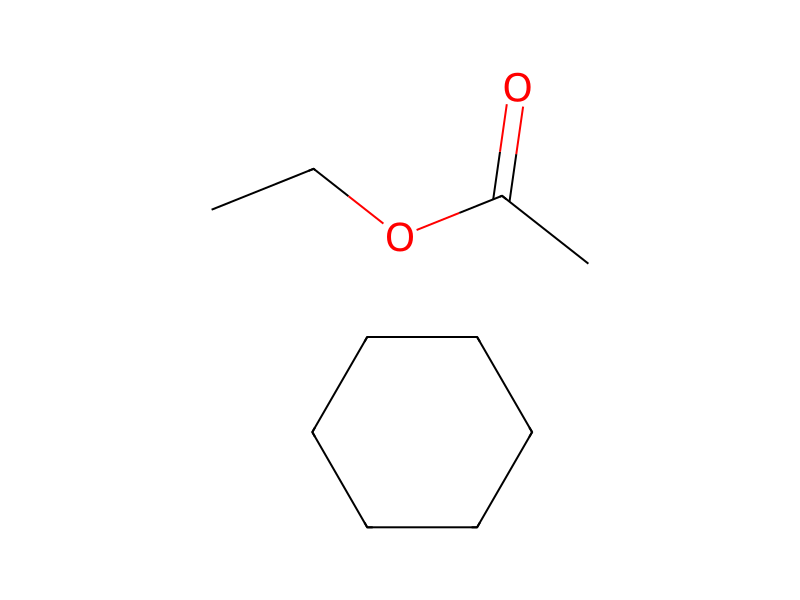
Ethyl Acetate → Cyclohexane ethylacetate
Reaction equation

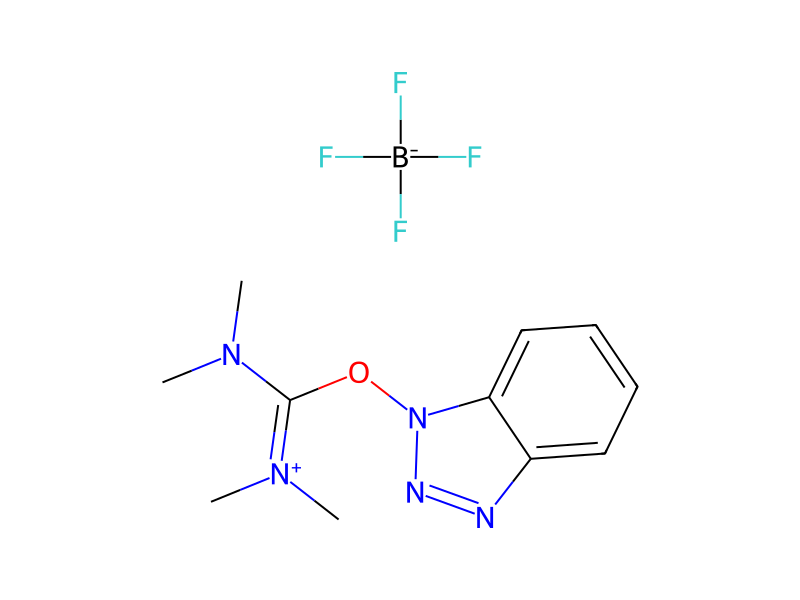
CN(C(ON1N=N[C:11]2[CH:12]=[CH:13][CH:14]=[CH:15][C:10]1=2)=[N+](C)C)C.[B-](F)(F)(F)F.C1C=CC2N(O)N=NC=2C=1.C(N(C(C)C)C(C)C)C.[C:42]([O:45][CH2:46][CH3:47])(=[O:44])[CH3:43]>C1COCC1>[C:42]([O:45][CH2:46][CH3:47])(=[O:44])[CH3:43].[CH2:10]1[CH2:15][CH2:14][CH2:13][CH2:12][CH2:11]1Participants




Procedure
The amine AM17 (1 eq.) was initially introduced into the flask together with the corresponding acid (1 eq.) under nitrogen. TBTU (1 eq.) and HOBT (1 eq.) were then added and the solids were dissolved in THF (8.5 ml/mmol of amine). N-ethyldiisopropylamine (2 eq.) was added to this mixture with constant stirring and the mixture was subsequently stirred at room temperature overnight. Ethyl acetate was added to the reaction solution and the mixture was washed with sat. NaCl solution, NaHCO3 solution, NaCl and with NH4HSO3 solution and evaporated to dryness with nitrogen and the residue was dried overnight using an oil pump. It was possible to obtain the desired product by means of flash column chromatography (mobile phase: ethyl acetate/cyclohexane, 1:5).
Workup
- stirringthe mixture was subsequently stirred at room temperature overnight
- washthe mixture was washed with sat. NaCl solution, NaHCO3 solution, NaCl and with NH4HSO3 solution
- customevaporated to dryness with nitrogen
- customthe residue was dried overnight
Sources & evidence
- ORD record
- ord-b3bf246f724a4e20a4608a7367c0f83c
- Source dataset
- uspto-grants-2011_02
- Patent number
- US07879858B2
Reaction notes
Loading…