1,2-Dichloroethane → HCID 11961339, compound
Reaction equation

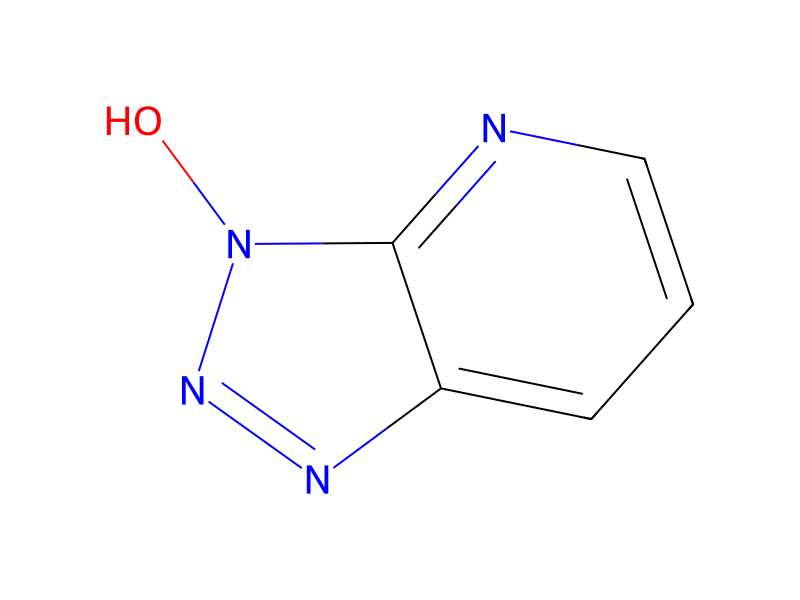
[NH:1]1[CH2:5][CH2:4][CH2:3][CH2:2]1.[C:6]([NH:16][CH2:17][C:18](O)=[O:19])([O:8][CH2:9][C:10]1[CH:15]=[CH:14][CH:13]=[CH:12][CH:11]=1)=[O:7].C1C=NC2N(O)N=NC=2C=1.CN1CCOCC1.C(Cl)CCl>ClCCl>[O:19]=[C:18]([N:1]1[CH2:5][CH2:4][CH2:3][CH2:2]1)[CH2:17][NH:16][C:6](=[O:7])[O:8][CH2:9][C:10]1[CH:11]=[CH:12][CH:13]=[CH:14][CH:15]=1Participants
7
Reactant 5




Product 1

Reagents, catalysts & solvents 1

Procedure
Pyrrolidine (248 uL, 3 mmol), N-CBZ-glycine (628 mg, 3 mmol), and HOAt (408 mg, 3 mmol) were dissolved in 10 mL of dichloromethane. NMM (0.66 mL, 6 mmol) was added, followed by EDC (575 mg, 3 mmol). After stirring overnight at room temperature, the reaction mixture was diluted with dichloromethane, washed with water, saturated aqueous NaHCO3 solution, and saturated aqueous NH4Cl solution, then dried (Na2SO4) and evaporated to yield phenylmethyl [2-oxo-2-(1-pyrrolidinyl)ethyl]carbamate as a beige solid (782 mg, 100%). LCMS: (M+H)+: 263.1.
Workup
- washwashed with water, saturated aqueous NaHCO3 solution, and saturated aqueous NH4Cl solution
- dry with materialdried (Na2SO4)
- customevaporated
Sources & evidence
- ORD record
- ord-633f7f47c1234d36a070219b17d47d13
- Source dataset
- uspto-grants-2011_02
- Patent number
- US07893056B2
Reaction notes
Loading…