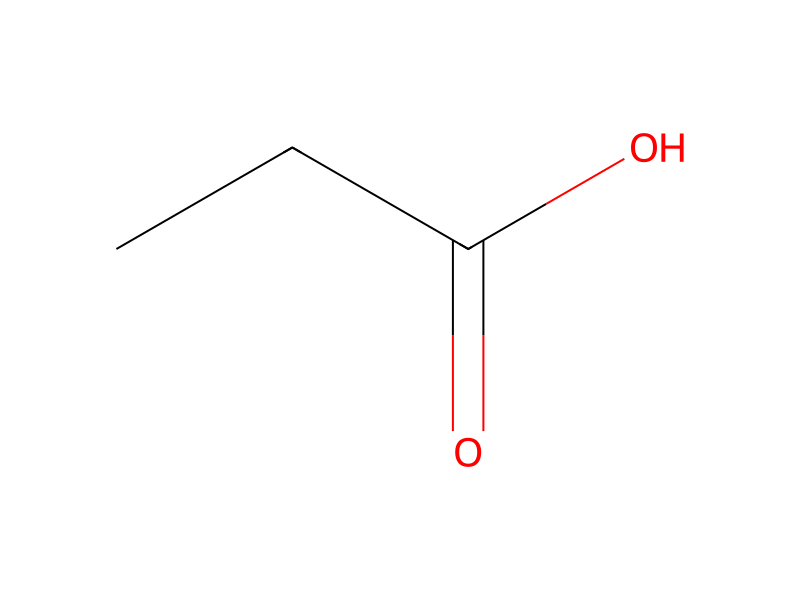
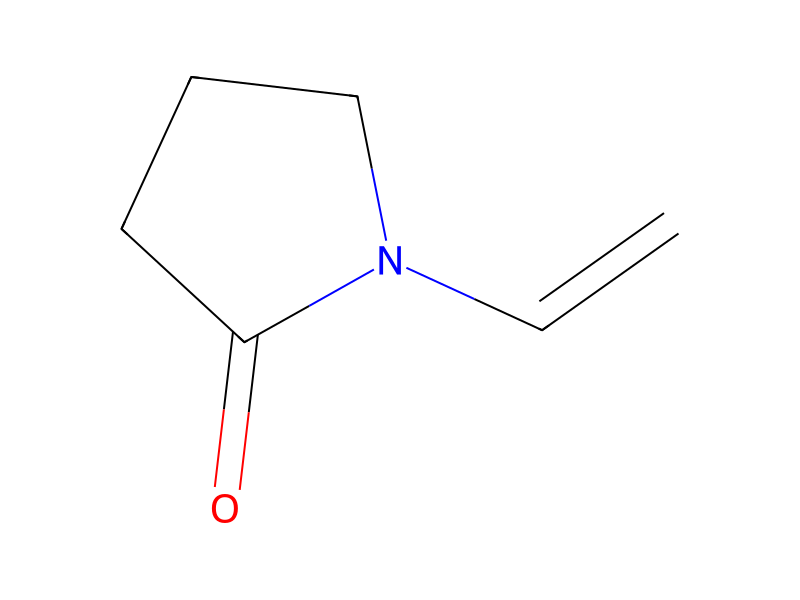
Acetic Acid → N-vinyl-2-pyrrolidone
Reaction equation

[NH3:1].[C:2](=[O:5])([O-])[O-].C(=O)([O-])O.Cl.Br.I.[C:13](O)(=O)[CH2:14][CH3:15].S(=O)(=O)(O)O.P(=O)(O)(O)O.[C:28]([OH:31])(=O)[CH3:29]>>[CH3:13][C:14]([CH3:15])=[CH:29][C:28]([NH2:1])=[O:31].[CH:28]([N:1]1[CH2:13][CH2:14][CH2:15][C:2]1=[O:5])=[CH2:29]Participants
12
Reactant 10









Product 2

Procedure
In the case of hydrophilic monomers of acid type, an at least one 1M solution of base, such as a salt of hydroxonium ion (OH−), an amine, ammonia, a carbonate (CO32−) salt or a hydrogencarbonate (HCO3−) salt, is added to the vigorously stirred solution. In the case of hydrophilic monomers of amine type, an at least 1M solution of acid, such as hydrochloric acid, hydrobromic acid, hydriodic acid, acetic acid, propionic acid, sulfuric acid, phosphoric acid or hydroboric acid, is added. In the case of neutral hydrophilic monomers, such as dimethylacrylamide or vinylpyrrolidone, the solution obtained in 1 is left unchanged.
Sources & evidence
- ORD record
- ord-7a083b934d4c4f43a44ba5ea47b352a0
- Source dataset
- uspto-grants-2011_02
- Patent number
- US07893163B2
Reaction notes
Loading…