3-Furanol, tetrahydro- → Triphenylphosphine Oxide
Reaction equation

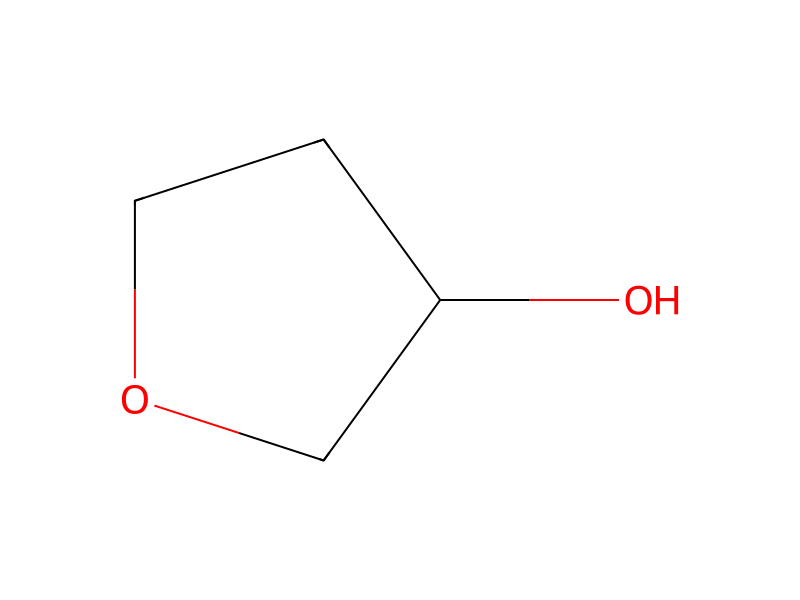
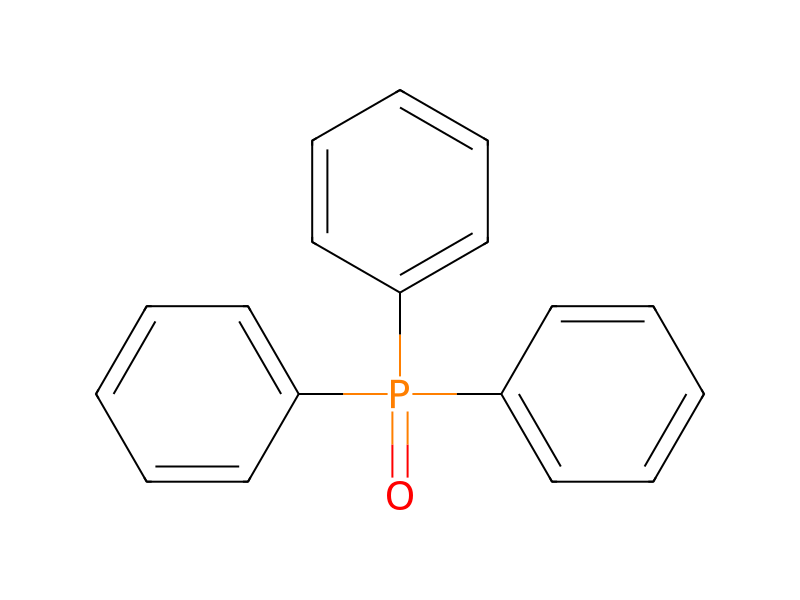
N(C(OCC)=O)=NC(OCC)=[O:4].OC1C=C(C=CC=1)C(OCC)=O.OC1CCOC1.[C:31]1([P:37]([C:44]2[CH:49]=[CH:48][CH:47]=[CH:46][CH:45]=2)[C:38]2[CH:43]=[CH:42][CH:41]=[CH:40][CH:39]=2)[CH:36]=[CH:35][CH:34]=[CH:33][CH:32]=1>C1COCC1>[C:44]1([P:37](=[O:4])([C:31]2[CH:32]=[CH:33][CH:34]=[CH:35][CH:36]=2)[C:38]2[CH:43]=[CH:42][CH:41]=[CH:40][CH:39]=2)[CH:45]=[CH:46][CH:47]=[CH:48][CH:49]=1Participants
Reactant 4



Product 1
Reagents, catalysts & solvents 1

Conditions
- Temperature
- 0 °C
Procedure
Diethyl azodicarboxylate (2.09 g) was added to a stirred mixture of ethyl 3-hydroxybenzoate (1.662 g), 3-hydroxytetrahydrofuran (0.881 g), triphenylphosphine (3.41 g) and THF (40 ml) which had been cooled to 0° C. The resultant mixture was allowed to warm to ambient temperature and was stirred for 18 hours. The mixture was evaporated and the residue was triturated under a 9:1 mixture of hexane and ethyl acetate. The solid triphenylphosphine oxide so formed was filtered off. The filtrate was evaporated and the residue was purified by column chromatography on silica using a 99:1 mixture of methylene chloride and methanol as eluent. There was thus obtained ethyl 3-(tetrahydrofuran-3-yloxy)benzoate (1.56 g); NMR Spectrum: (DMSOd6) 1.27 (t, 3H), 1.93 (m, 1H), 2.22 (m, 1H), 3.82 (m, 4H), 4.27 (m, 2H), 5.08 (m, 1H), 7.19 (m, 1H), 7.42 (m, 2H), 7.52 (d, 1H).
Workup
- temperatureto warm to ambient temperature
- customThe mixture was evaporated
- customthe residue was triturated under a 9:1 mixture of hexane and ethyl acetate
Sources & evidence
- ORD record
- ord-e03c8612c5d84de7be7e8f0f4d23a674
- Source dataset
- uspto-grants-2003_06
- Patent number
- US06579872B1
Reaction notes
Loading…