Diethyl Oxalate → Ethyl 2-(3,5-dichloropyridin-4-yl)-2-oxoacetate
Reaction equation

[Cl:1][C:2]1[CH:3]=[N:4][CH:5]=[C:6]([Cl:8])[CH:7]=1.[Li+].CC([N-]C(C)C)C.[C:17](OCC)(=[O:23])[C:18]([O:20][CH2:21][CH3:22])=[O:19]>C1COCC1>[Cl:1][C:2]1[CH:3]=[N:4][CH:5]=[C:6]([Cl:8])[C:7]=1[C:17](=[O:23])[C:18]([O:20][CH2:21][CH3:22])=[O:19]Participants
5
Reactant 3

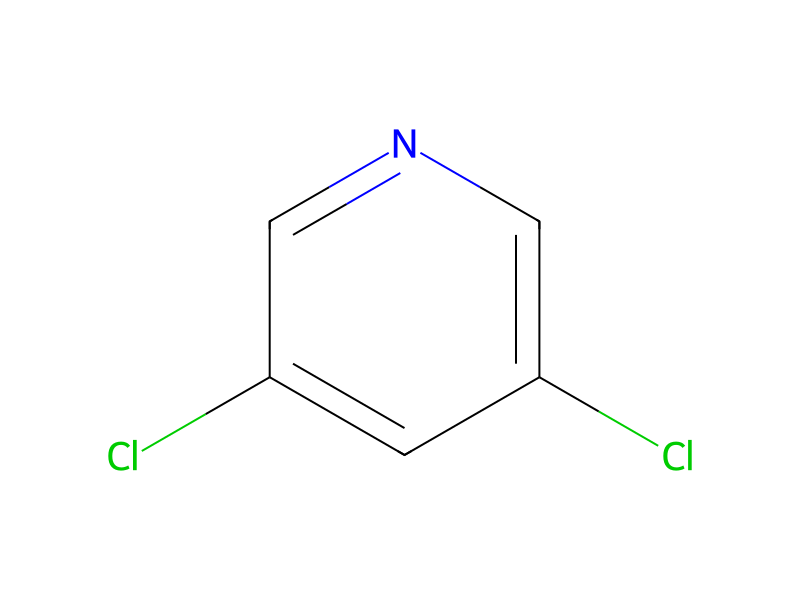

Product 1

Reagents, catalysts & solvents 1

Procedure
A solution of 4.44 g (30 mmol) of 3,5-dichloropyridine in 40 mL of THF is added dropwise over 30 minutes to a stirred solution of 23 mL (35 mmol) of 1.5 M LDA in 30 mL THF at −78° C. After a further 15 minutes at −78° C., a solution of 6.13 g (42 mmol) of diethyl oxalate in 15 mL THF is added, and the temperature is allowed to rise slowly to −20° C. The reaction mixture is then quenched with aqueous ammonium chloride, the solvent is removed, and the residue is worked up in EtOAc. Chromatography on silica, eluting with hexane/EtOAc (9:1), gives 2.4 g (32%) of the title compound as an oil.
Workup
- customto rise slowly to −20° C
- customThe reaction mixture is then quenched with aqueous ammonium chloride
- customthe solvent is removed
- washChromatography on silica, eluting with hexane/EtOAc (9:1)
Sources & evidence
- ORD record
- ord-0725f81774404ffaa945c1cb03cd544f
- Source dataset
- uspto-grants-2007_01
- Patent number
- US07169778B2
Reaction notes
Loading…