Dichloromethane → HCID 13961103, compound
Reaction equation

[C:1]([CH2:4][CH2:5][N:6]1[C:14]2[C:9](=[CH:10][CH:11]=[CH:12][CH:13]=2)[C:8]([CH2:15][CH2:16][NH:17][S:18]([C:21]2[CH:26]=[CH:25][C:24]([F:27])=[CH:23][CH:22]=2)(=[O:20])=[O:19])=[CH:7]1)([OH:3])=[O:2].C([SiH](CC)CC)C.C(Cl)Cl>C(OCC)(=O)C>[C:1]([CH2:4][CH2:5][N:6]1[C:14]2[C:9](=[CH:10][CH:11]=[CH:12][CH:13]=2)[CH:8]([CH2:15][CH2:16][NH:17][S:18]([C:21]2[CH:26]=[CH:25][C:24]([F:27])=[CH:23][CH:22]=2)(=[O:20])=[O:19])[CH2:7]1)([OH:3])=[O:2]Participants
5
Reactant 3

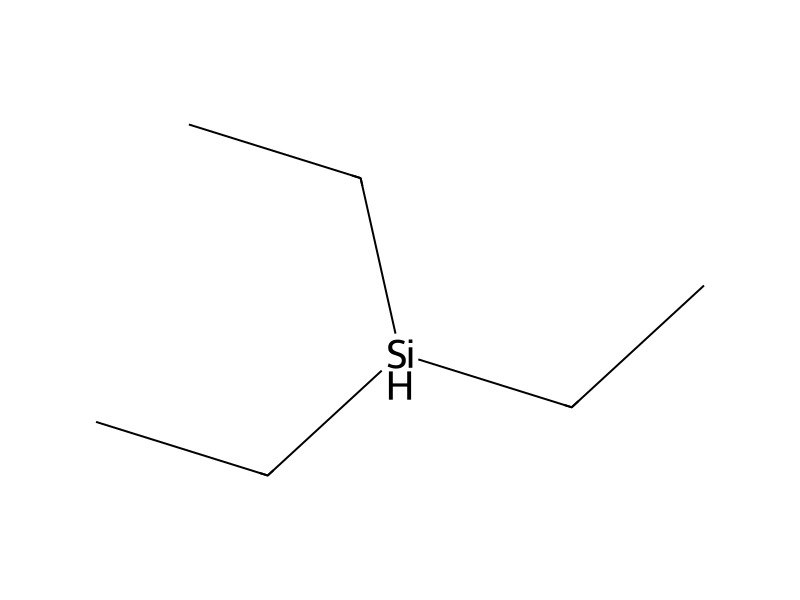

Product 1

Reagents, catalysts & solvents 1

Procedure
0.75 g (1.9 mmol) of N-[2-[1-(2-carboxyethyl)-1H-indol-3-yl]ethyl]-(4-fluorophenyl)sulphonamide are reduced with triethylsilane analogously to Example 1. 0.58 g of a viscous oily product is thus obtained (Rf =0.18, CH2Cl2 :ethyl acetate=100:2). After conversion of the product into its hydrochloride (analogously to Example 1), 0.62 g (76% of theory) of a solid residue is obtained.
Sources & evidence
- ORD record
- ord-c279b0ba9d494bf694bf839e96a385ad
- Source dataset
- uspto-grants-1989_02
- Patent number
- US04806551
Reaction notes
Loading…