Diethylcarbamoyl chloride → HCID 10924512, compound
Reaction equation

[CH2:1]([N:3]([CH2:7][CH3:8])[C:4](Cl)=[O:5])[CH3:2].CN(C1C=CC=CN=1)C.[O:18]1[CH2:23][CH2:22][CH2:21][CH2:20][CH:19]1[CH2:24][S:25][C:26]1[N:30]=[CH:29][NH:28][N:27]=1.C(N(CC)CC)C>O1CCCC1>[CH2:1]([N:3]([CH2:7][CH3:8])[C:4]([N:28]1[CH:29]=[N:30][C:26]([S:25][CH2:24][CH:19]2[CH2:20][CH2:21][CH2:22][CH2:23][O:18]2)=[N:27]1)=[O:5])[CH3:2]Participants
6
Reactant 4


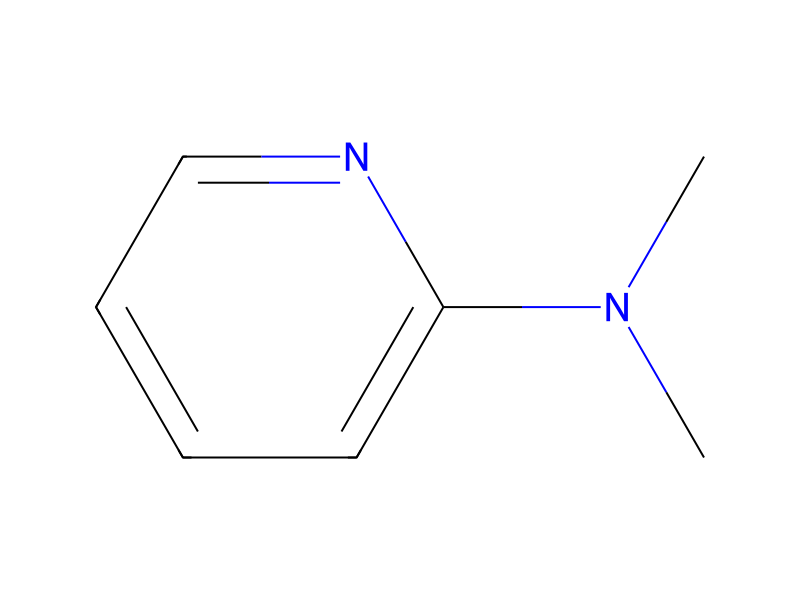

Product 1

Reagents, catalysts & solvents 1

Procedure
11.6 g (85 mmol) of diethylcarbamoyl chloride and a spatula-tipful of dimethylaminopyridine were added to a solution of 200 ml of absolute tetrahydrofuran and 17.0 g (85 mmol) of 3-(tetrahydropyran-2-yl)methylthio-1,2,4-triazole (step b). 9.5 g (94 mmol) of triethylamine were then added dropwise and the mixture was heated under reflux for 2 hours. The solvent was distilled off and the residue was purified by chromatography over silica gel. 11.2 g (44% of theory) of a viscous clear oil were obtained. (1H-NMR (CDCl3; δ in ppm): 8.75 (s,1H); 4.00 (d,1H); 3.70-3.50 (bm,5H); 3.40 (dt,1H); 3.25 (d,2H); 1.85 (d,1H); 1.80 (d,1H); 1.65-1.45 (m,4H); 1.30 (t,6H))
Workup
- temperaturethe mixture was heated
- temperatureunder reflux for 2 hours
- distillationThe solvent was distilled off
- customthe residue was purified by chromatography over silica gel
- custom11.2 g (44% of theory) of a viscous clear oil were obtained
Sources & evidence
- ORD record
- ord-a6583003168f416db3ea1115ead5e9d6
- Source dataset
- uspto-grants-2001_07
- Patent number
- US06265352B1
Reaction notes
Loading…