1,3-Dibromopropane → 2-(3-Bromopropoxy)-1H-isoindole-1,3(2H)-dione
Reaction equation

[OH:1][N:2]1[C:6](=[O:7])[C:5]2=[CH:8][CH:9]=[CH:10][CH:11]=[C:4]2[C:3]1=[O:12].[Br:13][CH2:14][CH2:15][CH2:16]Br.C(N(CC)CC)C>>[Br:13][CH2:14][CH2:15][CH2:16][O:1][N:2]1[C:3](=[O:12])[C:4]2[C:5](=[CH:8][CH:9]=[CH:10][CH:11]=2)[C:6]1=[O:7]Participants
4



Procedure
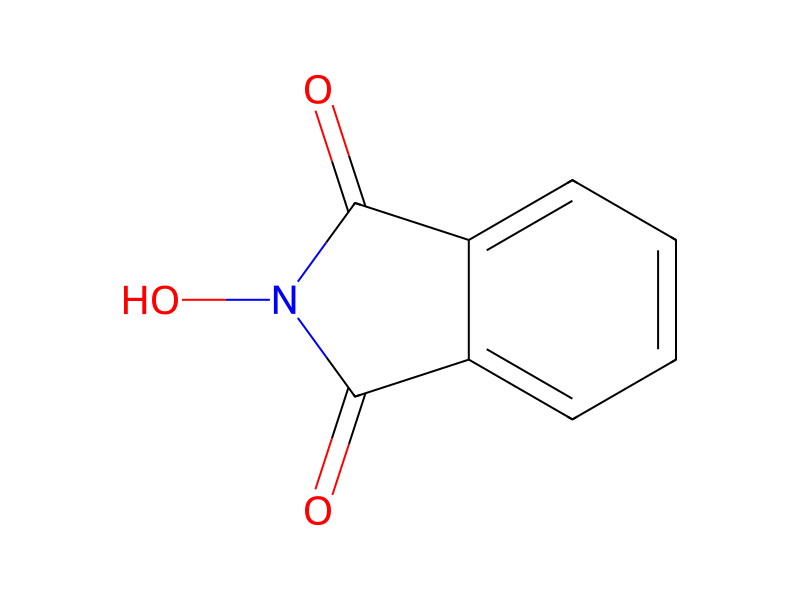
This compound was produced by modifications of the methods used J. Med. Chem., 1991, 34, 1071 starting with N-hydroxyphthalimide (10.0 g, 61.3 mmol), 1,3-dibromo-propane (24.8 g, 123 mmol) and triethylamine (12.4 g, 123 mmol). The crude material was purified by flash chromatography through silica gel using chloroform to give 2-(3-bromo-propoxy)-isoindole-1,3-dione (9.30 g, 53%) as a white powder. 1H NMR (400 MHz, CDCl3); δ 7.81 (m, 2H), 7.73 (m, 2H), 4.34 (t, 2H), 3.68 (t, 2H), 2.28 (m, 2H).
Workup
- customThis compound was produced by modifications of the methods
- customThe crude material was purified by flash chromatography through silica gel
Sources & evidence
- ORD record
- ord-f2e342ca374f4bbab4052d5869c5b9ab
- Source dataset
- uspto-grants-2008_03
- Patent number
- US07342039B2
Reaction notes
Loading…