Ethanol → Methyl Acetate
Reaction equation

CO.[CH2:3]([OH:5])[CH3:4].[C:6]([O:9][CH2:10]C)(=[O:8])[CH3:7].[CH2:12]([OH:15])[CH2:13][CH3:14]>[CH-]=O.[CH-]=O.[C-]#[O+].[C-]#[O+].[C-]#[O+].[C-]#[O+].[C-]#[O+].[C-]#[O+].[Co].[Co+2].C(O)CCC>[CH:6]([O:9][CH3:10])=[O:8].[C:6]([O:9][CH3:10])(=[O:8])[CH3:7].[CH4:3].[C:3]([O:15][CH2:12][CH2:13][CH3:14])(=[O:5])[CH3:4]Participants
10
Reactant 4




Product 4


Reagents, catalysts & solvents 2


Procedure
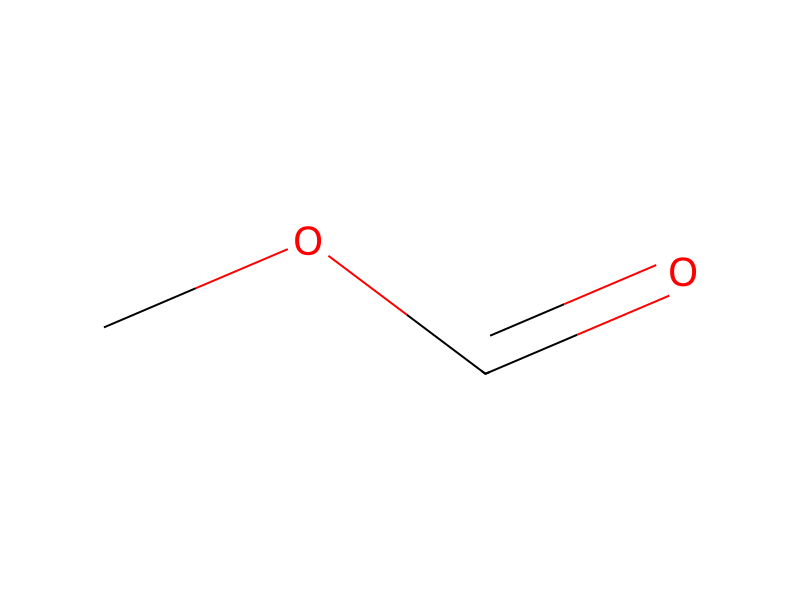
Thus in a paper published in Science 113, 206 (1951) Wender, Friedel and Orchin reported that methanol was reacted with synthesis gas (1H2 :1CO) in the presence of dicobalt octacarbonyl as catalyst to produce methyl formate (2%), methyl acetate (9.0%), ethyl alcohol (38.3%), ethyl acetate (6.3%), propyl alcohol (4.7%), butyl alcohol (0.09%), methane (8.5%), propyl acetate (0.1%) and a small amount of unidentified product, the total conversion of methanol being 76.4% over a reaction period of eight hours.
Sources & evidence
- ORD record
- ord-038033fdf48d4efe9d5301a64012f28f
- Source dataset
- uspto-grants-1980_05
- Patent number
- US04205190
Reaction notes
Loading…