Diisopropylethylamine → HCID 58117227, compound
Reaction equation

[C:1]([O:5][C:6]([N:8]1[C:16]2[C:11](=[CH:12][C:13]([CH2:17][N:18]3[CH2:23][CH2:22][N:21]([C:24]([O:26][C:27]([CH3:30])([CH3:29])[CH3:28])=[O:25])[CH2:20][CH2:19]3)=[CH:14][CH:15]=2)[CH:10]=[C:9]1[C:31]1[C:32](=[O:48])[N:33]([CH2:40][O:41][CH2:42][CH2:43][Si:44]([CH3:47])([CH3:46])[CH3:45])[CH:34]=[C:35]([C:37](O)=[O:38])[CH:36]=1)=[O:7])([CH3:4])([CH3:3])[CH3:2].[CH2:49]([NH:56][C:57]1[CH:58]=[N:59]NC=1)[C:50]1[CH:55]=[CH:54][CH:53]=[CH:52][CH:51]=1.O.O[N:64]1[C:68]2C=CC=CC=2N=N1.C(N(CC)C(C)C)(C)C.Cl.CN(C)CCCN=C=NCC>O1CCCC1>[C:1]([O:5][C:6]([N:8]1[C:16]2[C:11](=[CH:12][C:13]([CH2:17][N:18]3[CH2:19][CH2:20][N:21]([C:24]([O:26][C:27]([CH3:30])([CH3:28])[CH3:29])=[O:25])[CH2:22][CH2:23]3)=[CH:14][CH:15]=2)[CH:10]=[C:9]1[C:31]1[C:32](=[O:48])[N:33]([CH2:40][O:41][CH2:42][CH2:43][Si:44]([CH3:45])([CH3:47])[CH3:46])[CH:34]=[C:35]([C:37](=[O:38])[NH:59][C:58]2[CH:68]=[N:64][N:56]([CH2:49][C:50]3[CH:51]=[CH:52][CH:53]=[CH:54][CH:55]=3)[CH:57]=2)[CH:36]=1)=[O:7])([CH3:3])([CH3:4])[CH3:2]Participants
Reactant 5




Product 1

Reagents, catalysts & solvents 1

Conditions
- Temperature
- 90 °C
Procedure
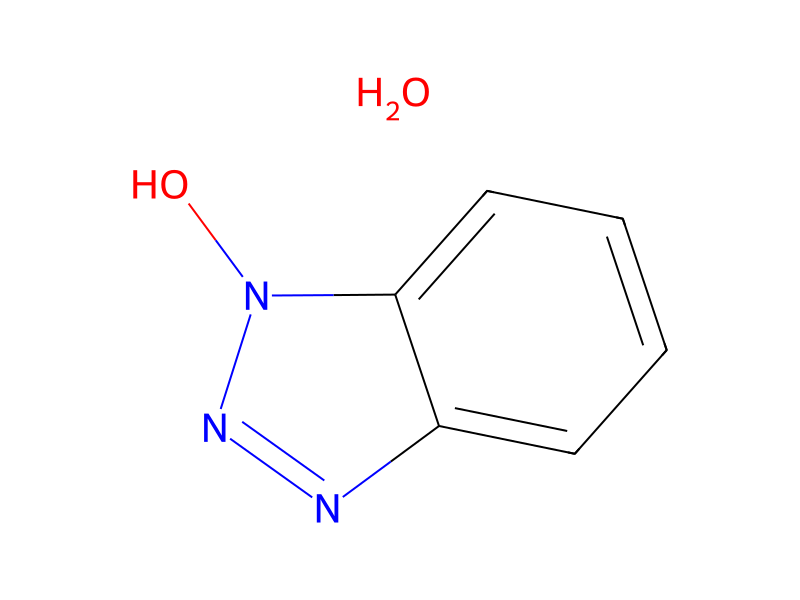
Intermediate (4c), 5-(4-tert-butoxycarbonyl-piperazin-1-ylmethyl)-2-[5-carboxy-2-oxo-1-(2-trimethylsilanyl-ethoxymethyl)-1,2-dihydro-pyridin-3-yl]indole-1-carboxylic acid tert-butyl ester, (1 g, 1.46 mmol), benzyl-1H-pyrazole-4-yl amine (0.75 g, 4.39 mmol), 1-hydroxybenzotriazole hydrate (0.59 g, 4.39 mmol) and tetrahydrofuran (15 mL) were placed in a microwave vial. To this solution was added N,N-diisopropylethylamine (0.58 g, 0.78 mL, 4.49 mmol) and N-(3-dimethylaminopropyl)-N′-ethylcarbodiimide hydrochloride (0.84 g, 4.39 mmol), the vial capped and heated in the microwave at 90° C. for 30 minutes. After cooling, the mixture was concentrated in vacuo and the residue partitioned between water and dichloromethane. The organic layer was separated and the aqueous was extracted with a further portion of dichloromethane. The combined dichloromethane layers were dried (Na2SO4) and concentrated in vacuo. The resultant crude product was purified by flash chromatography on SiO2 eluting with dichloromethane—15% methanol/dichloromethane (gradient) to afford the desired title compound as a yellow foam, 1.0 g, 82%.
Workup
- customthe vial capped
- temperatureAfter cooling
- concentrationthe mixture was concentrated in vacuo
- customthe residue partitioned between water and dichloromethane
- customThe organic layer was separated
- extractionthe aqueous was extracted with a further portion of dichloromethane
- dry with materialThe combined dichloromethane layers were dried (Na2SO4)
- concentrationconcentrated in vacuo
- customThe resultant crude product was purified by flash chromatography on SiO2 eluting with dichloromethane—15% methanol/dichloromethane (gradient)
Sources & evidence
- ORD record
- ord-90f472c141ec4de8ac81ec110b52294b
- Source dataset
- uspto-grants-2014_12
- Patent number
- US08916591B2
Reaction notes
Loading…