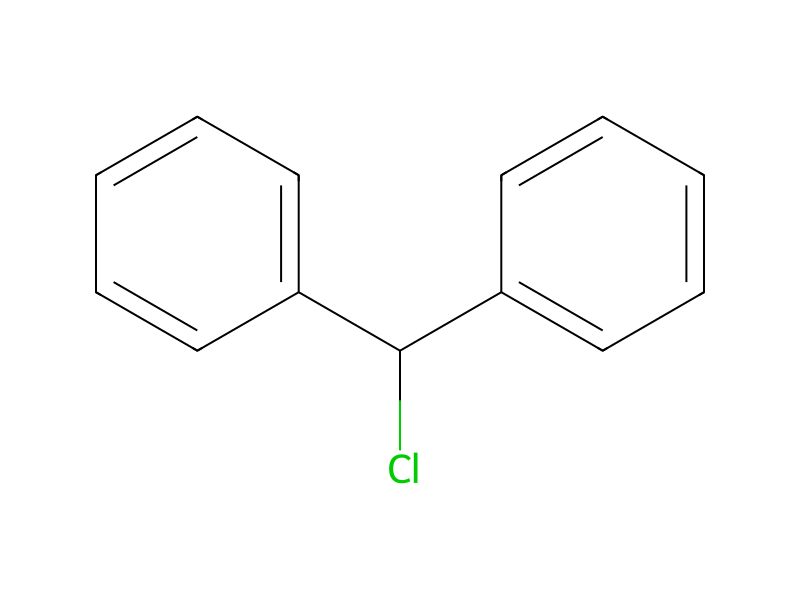
Chlorodiphenylmethane → HCID 12151496, compound
Reaction equation

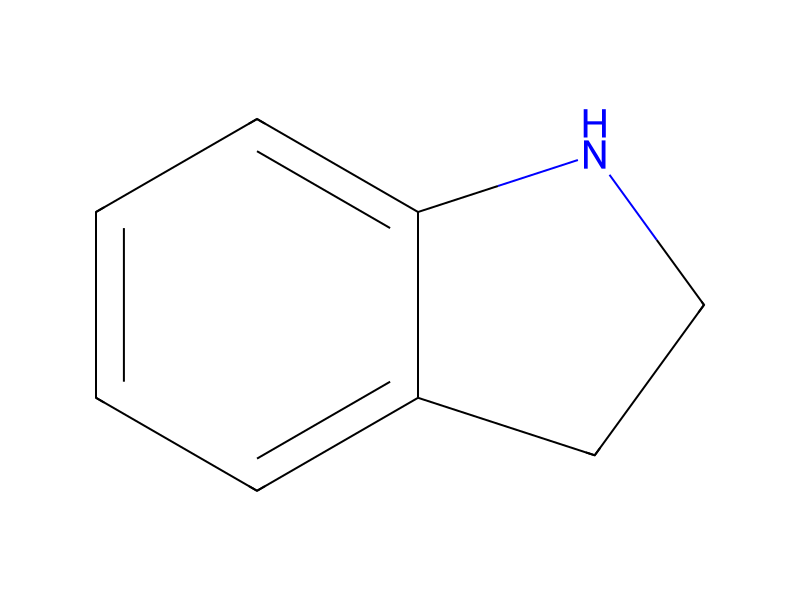
Br[CH:2]([C:9]1[CH:14]=[CH:13][CH:12]=[CH:11][CH:10]=1)[C:3]1[CH:8]=[CH:7][CH:6]=[CH:5][CH:4]=1.ClC(C1C=CC=CC=1)C1C=CC=CC=1.[NH:29]1[C:37]2[C:32](=[CH:33][CH:34]=[CH:35][CH:36]=2)[CH2:31][CH2:30]1.C(=O)([O-])[O-].[K+].[K+]>C1(C)C=CC=CC=1>[CH:2]([N:29]1[C:37]2[C:32](=[CH:33][CH:34]=[CH:35][CH:36]=2)[CH2:31][CH2:30]1)([C:9]1[CH:14]=[CH:13][CH:12]=[CH:11][CH:10]=1)[C:3]1[CH:8]=[CH:7][CH:6]=[CH:5][CH:4]=1Participants
6
Reactant 4


Product 1

Reagents, catalysts & solvents 1

Procedure
A mixture of 49.4 g (0.2 mole) of bromodiphenylmethane (an equimolar quantity of chlorodiphenylmethane may be used instead), 23.8 g (0.2 mole) of indoline, 55.2 g (0.4 mole) of anhydrous potassium carbonate, and 200 ml of toluene is refluxed for 16 hrs under nitrogen with good stirring. The salts are removed by filtration, and the solvent is evaporated. The residue is chromatographed on silica gel with 30:70 toluene-hexane as the eluent. The product is a viscous oil, which can be crystallized from ethanol to give 1-benzhydryl-indoline, m.p. 62°-63.5°. The structure is confirmed by nmr spectroscopy and elemental analysis:
Workup
- temperatureis refluxed for 16 hrs under nitrogen with good stirring
- customThe salts are removed by filtration
- customthe solvent is evaporated
- customThe residue is chromatographed on silica gel with 30:70 toluene-hexane as the eluent
- customcan be crystallized from ethanol
Sources & evidence
- ORD record
- ord-406bd140ed194e379a66d94d7fffe542
- Source dataset
- uspto-grants-1981_02
- Patent number
- US04251659
Reaction notes
Loading…