Triethylamine → HCID 15409145, compound
Reaction equation

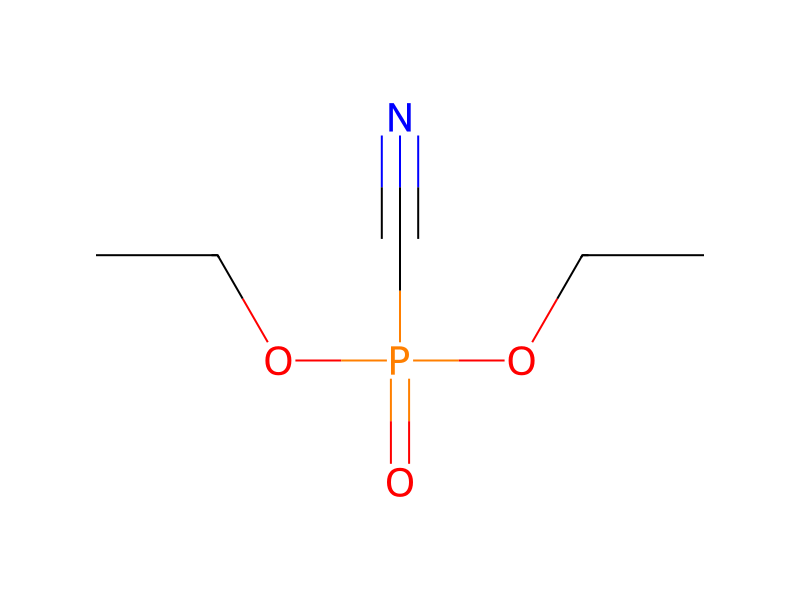
[Cl:1][C:2]1[CH:3]=[CH:4][C:5]2[N:6]([CH:8]=[C:9]([C:11]([OH:13])=O)[N:10]=2)[CH:7]=1.[CH3:14][O:15][C:16]1[CH:21]=[CH:20][C:19]([N:22]2[CH2:27][CH2:26][NH:25][CH2:24][CH2:23]2)=[CH:18][CH:17]=1.C(P(=O)(OCC)OCC)#N.C(N(CC)CC)C>ClCCl.CN(C=O)C>[Cl:1][C:2]1[CH:3]=[CH:4][C:5]2[N:6]([CH:8]=[C:9]([C:11]([N:25]3[CH2:24][CH2:23][N:22]([C:19]4[CH:18]=[CH:17][C:16]([O:15][CH3:14])=[CH:21][CH:20]=4)[CH2:27][CH2:26]3)=[O:13])[N:10]=2)[CH:7]=1Participants
Reactant 4



Product 1

Reagents, catalysts & solvents 2


Procedure
To 6-chloroimidazo[1,2-a]pyridine-2-carboxylic acid (0.170 g) and 1-(4-methoxyphenyl)piperazine (Aldrich; 0.165 g) in dichloromethane (4 mL) are added diethyl cyanophosphonate (Aldrich; 0.157 mL) and triethylamine (0.144 mL), followed by DMF (2 mL). After stirring overnight, the mixture is quenched with aqueous sodium bicarbonate and then partitioned between dichloromethane and aqueous sodium bicarbonate. The organic layers are filtered through sodium sulfate and concentrated, and the residue is chromatographed on silica gel using methanol/dichloromethane (2/98) to give 0.212 g of 1-[(6-chloroimidazo[1,2-a]pyridin-2-yl)carbonyl]-4-(4-methoxyphenyl)piperazine; mp 180-181° C.: IR (mineral oil) 1620, 1517, 1237, 1246, 1230 cm-1. 1H NMR (CDCl3) δ3.16, 3.78, 3.97, 4.47, 6.86, 6.94, 7.21, 7.56, 8.10,8.20.
Workup
- customthe mixture is quenched with aqueous sodium bicarbonate
- custompartitioned between dichloromethane and aqueous sodium bicarbonate
- filtrationThe organic layers are filtered through sodium sulfate
- concentrationconcentrated
- customthe residue is chromatographed on silica gel
Sources & evidence
- ORD record
- ord-62e7d426063445229323c54c70bb7967
- Source dataset
- uspto-grants-1999_06
- Patent number
- US05912246
Reaction notes
Loading…