Water → 3-(pyrrolidin-2-ylmethyl)-1H-indole
Reaction equation

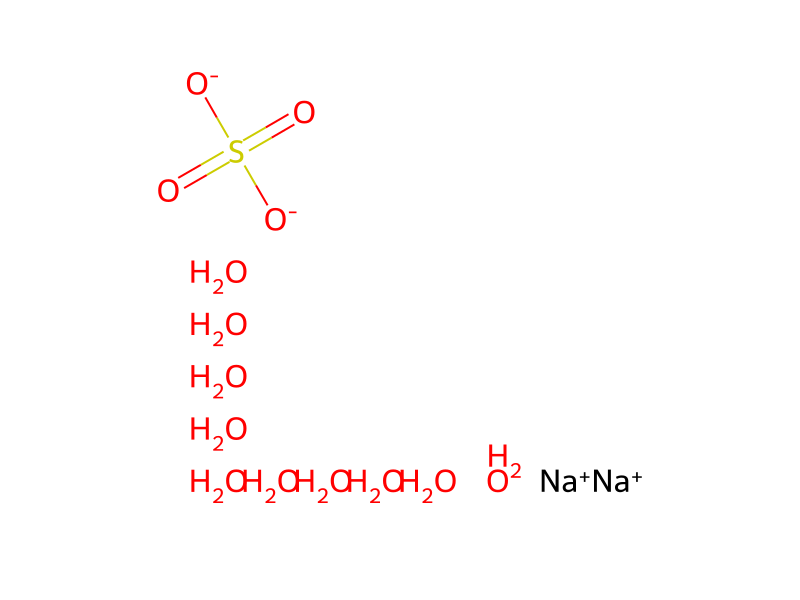
[BH4-].[Li+].[NH:3]1[CH2:7][CH2:6][CH2:5][CH:4]1[C:8]([C:10]1[C:18]2[C:13](=[CH:14][CH:15]=[CH:16][CH:17]=2)[NH:12][CH:11]=1)=O.O.O.O.O.O.O.O.O.O.O.S([O-])([O-])(=O)=O.[Na+].[Na+].O>O1CCCC1.C(OCC)(=O)C>[NH:3]1[CH2:7][CH2:6][CH2:5][CH:4]1[CH2:8][C:10]1[C:18]2[C:13](=[CH:14][CH:15]=[CH:16][CH:17]=2)[NH:12][CH:11]=1Participants





Procedure
To a stirred solution of lithium borohydride (0.33 g, 15.2 mmol, 3.0 eq) in anhydrous tetrahydrofuran (10 mL) under nitrogen was added dropwise a solution of the 3-(pyrrolidin-2-ylcarbonyl)-1H-indole (10 mmol) in anhydrous tetrahydrofuran (40 mL). The resulting reaction solution was heated at reflux under nitrogen for a time depending on the substrate. The reaction was then cooled, and sodium sulfate decahydrate (approximately 25 g) was added slowly with caution, followed by water (1 mL), and ethyl acetate (50 mL). The resulting reaction mixture was stirred at room temperature under nitrogen for 4 hours. Then the reaction mixture was filtered through Celite®, and the filtrate was evaporated under reduced pressure. The residue was column chromatographed using silica gel (approximately 200 g) eluting with an appropriate solvent system to afford the appropriate 3-(pyrrolidin-2-ylmethyl)-1H-indole.
Workup
- customThe resulting reaction solution
- temperaturewas heated
- temperatureat reflux under nitrogen for a time
- temperatureThe reaction was then cooled
- customThe resulting reaction mixture
- filtrationThen the reaction mixture was filtered through Celite®
- customthe filtrate was evaporated under reduced pressure
- customchromatographed
- washeluting with an appropriate solvent system
Sources & evidence
- ORD record
- ord-2ace6b3f8d9b452baa06dc214ba7e033
- Source dataset
- uspto-grants-1999_03
- Patent number
- US05886008
Reaction notes
Loading…