3-(Trimethoxysilyl)propyl chloride → 3-(Trimethoxysilyl)propyl methacrylate
Reaction equation

Cl[CH2:2][CH2:3][CH2:4][Si:5]([O:10][CH3:11])([O:8][CH3:9])[O:6][CH3:7].[C:12]([O-:17])(=[O:16])[C:13]([CH3:15])=[CH2:14].[K+]>C(P(CCCC)CCCC)CCC.C1C2NC3C(=CC=CC=3)SC=2C=CC=1>[C:12]([O:17][CH2:2][CH2:3][CH2:4][Si:5]([O:10][CH3:11])([O:8][CH3:9])[O:6][CH3:7])(=[O:16])[C:13]([CH3:15])=[CH2:14]Participants
5
Reactant 2


Product 1

Reagents, catalysts & solvents 2

Procedure
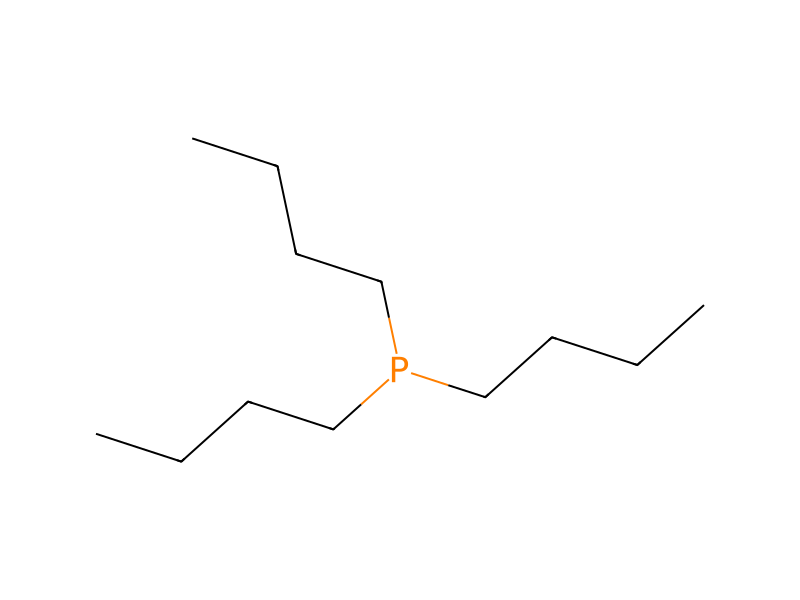
Using a method analogous to Example 1, 198.7 g (1 mol) of 3-chloropropyltrimethoxysilane are reacted in the presence of 6.1 g (0.03 mol) of tri-n-butylphosphine and 0.1 g of phenothiazine with 130.4 g (1.05 mol) of potassium methacrylate at 90° C. The reaction is complete 9 hours after all the potassium methacrylate has been introduced. Work-up gives 226.0 g (91%) of 3-methacryloxypropyltrimethoxysilane having a purity of 98.3%.
Sources & evidence
- ORD record
- ord-9b8518d0a69e42bb892eb4c309d39aab
- Source dataset
- uspto-grants-2009_11
- Patent number
- US07619108B2
Reaction notes
Loading…