Acetic Anhydride → HCID 68119340, compound
Reaction equation

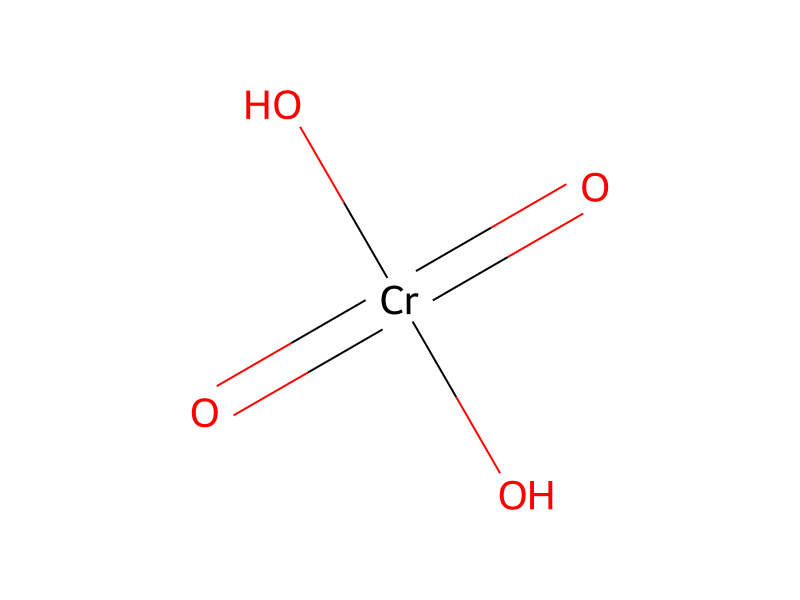
[C:1]([O:4][C@H:5]1[CH2:24][CH2:23][C@@:22]2([CH3:25])[C@H:7]([CH2:8][CH2:9][C@@H:10]3[C@@H:21]2[CH2:20][CH2:19][C@@:18]2([CH3:26])[C@H:11]3[CH2:12][CH:13]=[C:14]2C(=O)C)[CH2:6]1)(=[O:3])[CH3:2].C(OC(=O)C)(=[O:29])C.[Cl-].[Li+].[Cr](O)(O)(=O)=O.P(Cl)(Cl)(Cl)=O>O.C(O)(=O)C.C(N(CC)CC)C.CN(C)C=O>[C:1]([O:4][C@H:5]1[CH2:24][CH2:23][C@@:22]2([CH3:25])[C@H:7]([CH2:8][CH2:9][C@@H:10]3[C@@H:21]2[CH2:20][CH2:19][C@@:18]2([CH3:26])[C@H:11]3[CH2:12][CH2:13][C:14]2=[O:29])[CH2:6]1)(=[O:3])[CH3:2]Participants
Reactant 5




Product 1

Reagents, catalysts & solvents 4




Procedure
The process of the present invention utilizes sarsasaponin as the initial starting material. Hydrolysis of that substance using a mineral acid affords sarsasapogenin which is then converted to 3β-acetoxy-5β-pregn-16-en-20-one by first contacting with acetic anhydride, N,N-dimethylformamide and lithium chloride, and then oxidizing with a solution of chromic acid in water and acetic acid. The 20-one material is converted to the corresponding oxime, which, by reaction with phosphoryl chloride and triethylamine, rearranges to give 3β-acetoxy-5β-androstan-17-one. Alkaline hydrolysis of the 3β-acetoxy compound yields the 3β-hydroxy compound which is contacted with a lower alkyl vinyl ether and a catalytic amount of acid, followed by ethynylation, to afford a 3β-[1-(lower alkoxy)ethoxy]-17α-ethynyl-5β-pregn-17β-ol. A second1-(lower alkoxy)-ethoxy group is then introduced at the 17-position in the same manner as described earlier to give the corresponding bis-[1-(lower alkoxy)ethoxy] compound. That bis-[1-(lower alkoxy)ethoxy] compound is then reacted with methylmagnesium chloride in tetrahydrofuran to give the steroid-ethynyl Grignard. The Grignard solution is then cooled and carbon dioxide is bubbled into the solution while the temperature is maintained at about -5° to 25° C. At the start of the carbon dioxide addition, the temperature of the mixture is preferably in the lower portion of the indicated temperature range. The two 1-(lower alkoxy)ethoxy groups are then removed by treating the product with a slight excess of aqueous hydrochloric acid or a similar strong acid. This reaction is preferably carried out in the presence of 2-methyl-2,4-pentanediol which readily forms a stable cyclic acetal with the acetaldehyde released during the removal of the blocking group. This avoids the occurrence of various possible side reactions with the acetaldehyde. The product obtained, 3β,17β-dihydroxy-5β-pregn-20-yne-21-carboxylic acid, is conveniently isolated as the triethylamine salt. The acid salt is then hydrogenated to give the desired propionic acid salt which is then readily lactonized by acidification. The resulting 3β,17β-dihydroxy-5β-pregnane-21-carboxylic acid γ-lactone is oxidized to the corresponding 3-one using Jones Reagent (CrO3 in sulfuric acid/water). The 3-one compound is then treated with a solution of bromine in tetrahydrofuran to yield the 4-bromo-17β-hydroxy-3-oxo-5β-pregnane-21-carboxylic acid γ-lactone which, by dehydrobromination, is converted to the desired product, 17β-hydroxy-3-oxo-17α-pregn-4-ene-21-carboxylic acid γ-lactone.
Sources & evidence
- ORD record
- ord-6664a13b60e94e29bdfba9616f6929e7
- Source dataset
- uspto-grants-1977_11
- Patent number
- US04057543
Reaction notes
Loading…