Acetic Acid → 2-Hydroxydecanoic Acid
Reaction equation

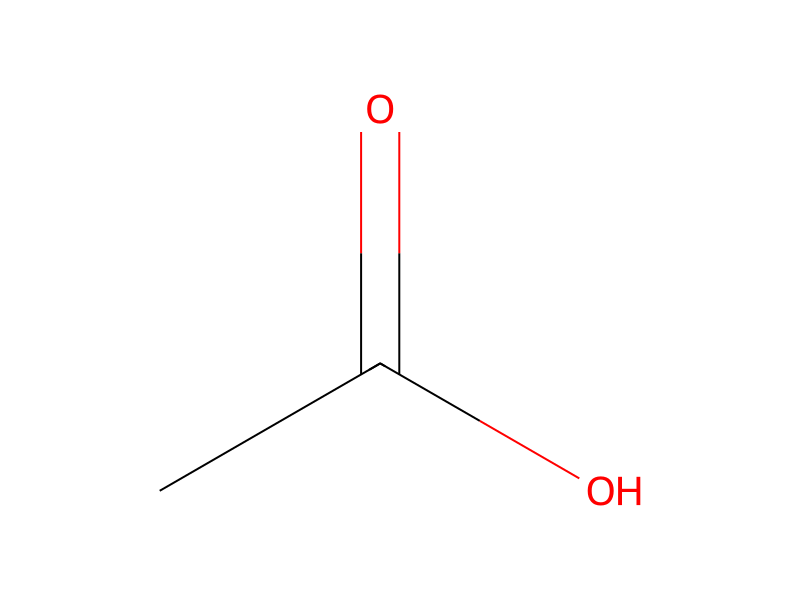
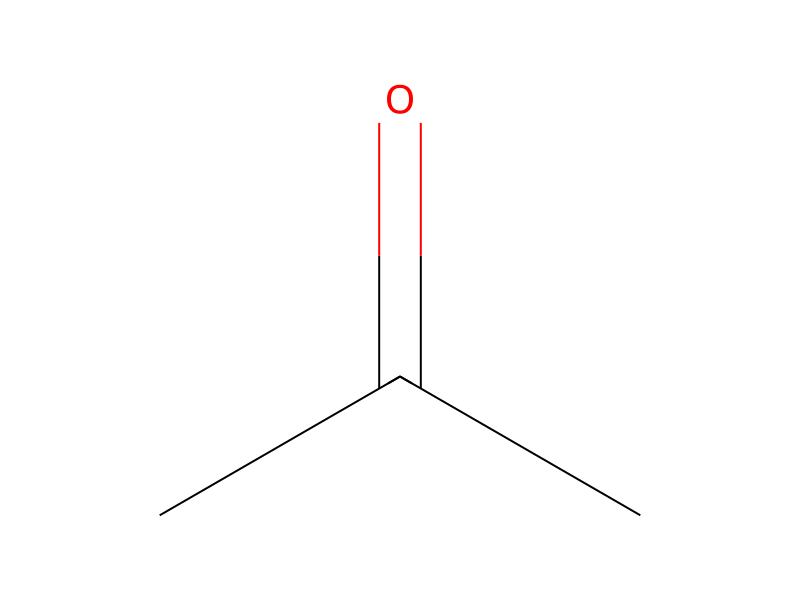
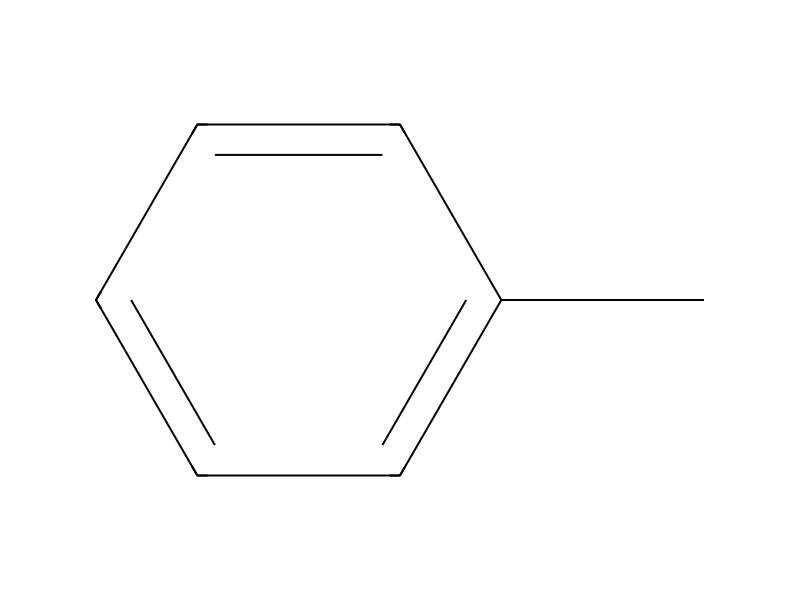
[C:1]([OH:4])(=[O:3])[CH3:2].[OH2:5].[CH3:6][C:7]([CH3:9])=O.[C:10]1(C)C=[CH:14][CH:13]=[CH:12][CH:11]=1>C(OCC)(=O)C>[OH:5][CH:2]([CH2:6][CH2:7][CH2:9][CH2:10][CH2:11][CH2:12][CH2:13][CH3:14])[C:1]([OH:4])=[O:3]Participants
Reactant 4
Product 1

Reagents, catalysts & solvents 1
Procedure
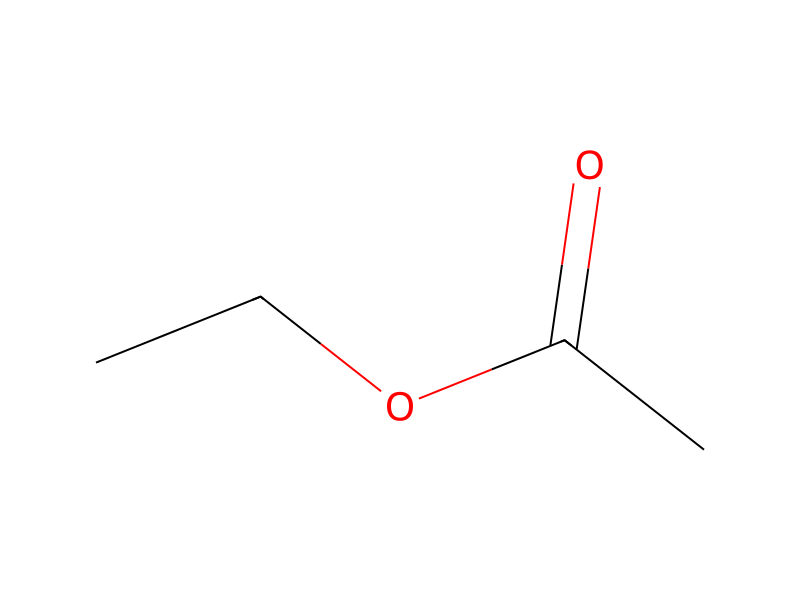
Either of the diastereomeric salts so formed may then be reacted with a mineral or organic acid (e.g., sulfuric or acetic acid) in an inert solvent such as ethylacetate, water, acetone or toluene, preferably ethyl acetate, to yield the pure enantiomer of 2-hydroxydecanoic acid having the same stereochemistry at the carbon alpha to the carbonyl group (e.g., VII→VIII in scheme 2). The reaction temperature may range from about -78° C. to about 100° C., but is preferably about room temperature. Either of the resulting pure enantiomers of 2-hydroxydecanoic acid can then be converted into the pure enantiomer of methyl-2-hydroxydecanoate having the same stereochemistry at the carbon alpha to the carbonyl group by treatment with methanol and hydrochloric acid at a temperature from about -78° C. to about 100° C. (e.g., VIII→IX in scheme 2). The solvent may be methanol or another inert, polar, aprotic solvent such as methanol/THF, methanol/methylene chloride or methanol/toluene.
Workup
- customEither of the diastereomeric salts so formed may
Sources & evidence
- ORD record
- ord-e201a1dad3fa443d9ffd14cc6749650b
- Source dataset
- uspto-grants-1996_03
- Patent number
- US05498786
Reaction notes
Loading…