Hydrochloric Acid → Dextrose mannitol
Reaction equation

Cl.N(C[C@@H]([C@H]([C@@H]([C@@H](CO)O)O)O)O)C.[O:15]=[CH:16][C@@H:17]([C@H:19]([C@@H:21]([C@@H:23]([CH2:25][OH:26])[OH:24])[OH:22])[OH:20])[OH:18].[CH2:27]([OH:38])[C@H:28]([C@H:30]([C@@H:32]([C@@H:34]([CH2:36][OH:37])[OH:35])[OH:33])[OH:31])[OH:29]>>[O:15]=[CH:16][C@@H:17]([C@H:19]([C@@H:21]([C@@H:23]([CH2:25][OH:26])[OH:24])[OH:22])[OH:20])[OH:18].[CH2:36]([OH:37])[C@H:34]([C@H:32]([C@@H:30]([C@@H:28]([CH2:27][OH:38])[OH:29])[OH:31])[OH:33])[OH:35]Participants
5

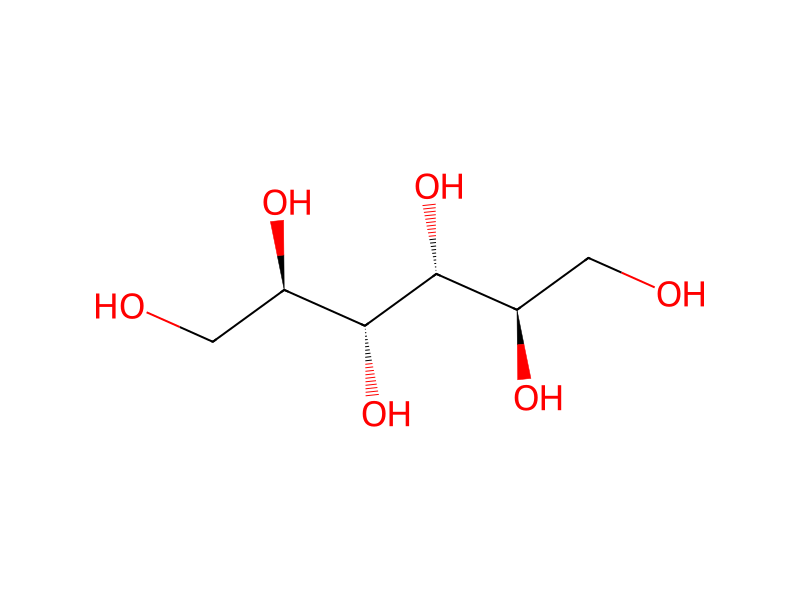

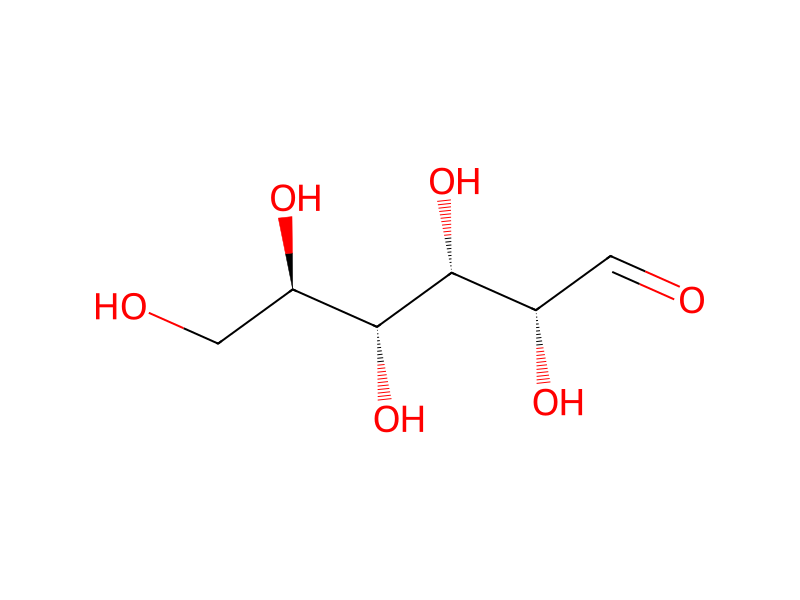

Procedure
Solutions containing pectin (Slendid 100) (20 mg/ml) were prepared at pH 3, 4, 5 and 6 (pH adjustments were made with 0.1M HCl or 0.1M meglumine). Into 5 ml of each solution was dissolved 0, 62.5, 125, 187.5 or 200 mg anhydrous dextrose or mannitol to give approximate dextrose/mannitol concentrations of 0, 12.5, 25, 37.5 or 50 mg/ml respectively. An excess of buprenorphine hydrochloride was then added and the mixture stirred overnight at 18° C. Saturated buprenorphine hydrochloride solutions were produced by passing each mixture through a 0.2 μm polycarbonate membrane filter. The concentration of buprenorphine hydrochloride in the filtrate was determined by hplc.
Sources & evidence
- ORD record
- ord-4f0688373ce74594bb31539c92a85d64
- Source dataset
- uspto-grants-2010_02
- Patent number
- US07666876B2
Reaction notes
Loading…