3-(Trifluoromethyl)aniline → HCID 1214264, compound
Reaction equation

[Br:1][C:2]1[CH:7]=[CH:6][C:5]([CH2:8][C:9]([OH:11])=O)=[CH:4][CH:3]=1.C(N(C(C)C)CC)(C)C.C(N1C=CN=C1)(N1C=CN=C1)=O.[F:33][C:34]([F:43])([F:42])[C:35]1[CH:36]=[C:37]([CH:39]=[CH:40][CH:41]=1)[NH2:38]>O1CCCC1.ClCCl>[Br:1][C:2]1[CH:3]=[CH:4][C:5]([CH2:8][C:9]([NH:38][C:37]2[CH:39]=[CH:40][CH:41]=[C:35]([C:34]([F:33])([F:42])[F:43])[CH:36]=2)=[O:11])=[CH:6][CH:7]=1Participants


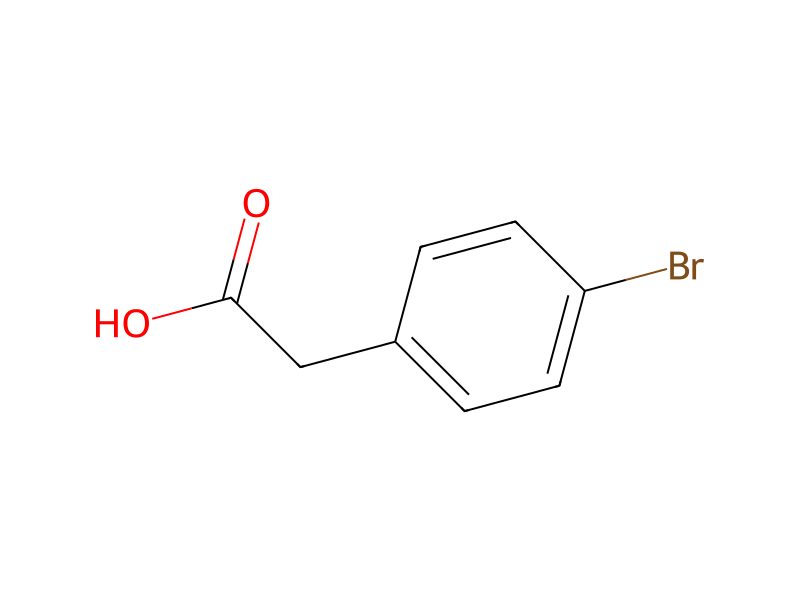




Procedure
Dissolve 4-bromophenylacetic acid (10.00 g, 46.50 mmol), diisopropylethylamine (12.02 g, 16.20 mL, 93.00 mmol) and 1,1′-carbonyldiimidazole (8.29 g, 51.15 mmol) in tetrahydrofuran (200 mL) at room temperature. Stir the contents under nitrogen for one hour. Add m-trifluoromethylaniline (15.00 g, 93.00 mmol) and stir the reaction overnight at room temperature. Concentrate the reaction to near dryness, dissolve in dichloromethane (250 mL) and extract with 2 N NaOH (200 mL), water (100 mL) and 1 N HCl (2×200 mL). Wash the organic layer with saturated aqueous saturated sodium chloride (100 mL), dry over MgSO4, filter and concentrate. Dry load the material onto silica (100 g) and chromatograph on silica using dichloromethane as eluent to yield the product (13.00 g, 78.1%). MS(ES), m/z 356/358 (M+1).
Workup
- customthe reaction overnight at room temperature
- concentrationConcentrate
- customthe reaction
- extractionextract with 2 N NaOH (200 mL), water (100 mL) and 1 N HCl (2×200 mL)
- washWash the organic layer with saturated aqueous saturated sodium chloride (100 mL)
- dry with materialdry over MgSO4
- filtrationfilter
- concentrationconcentrate
- customDry load the material onto silica (100 g) and chromatograph on silica
Sources & evidence
- ORD record
- ord-de90e1d1acb74642b5ed92aa4ff28e1f
- Source dataset
- uspto-grants-2010_02
- Patent number
- US07666879B2
Reaction notes
Loading…