Picolinic acid → (1,4-Diazabicyclo[3.2.2]non-4-yl)(pyridin-2-yl)methanone
Reaction equation

Cl.Cl.[N:3]12[CH2:11][CH2:10][CH:7]([CH2:8][CH2:9]1)[NH:6][CH2:5][CH2:4]2.[N:12]1[CH:17]=[CH:16][CH:15]=[CH:14][C:13]=1[C:18](O)=[O:19].C(N(C(C)C)CC)(C)C.O.ON1C2C=CC=CC=2N=N1.CN(C(ON1N=NC2C=CC=CC1=2)=[N+](C)C)C.[B-](F)(F)(F)F>CN(C=O)C.CO.C(Cl)(Cl)Cl.C(Cl)(Cl)Cl>[N:3]12[CH2:11][CH2:10][CH:7]([CH2:8][CH2:9]1)[N:6]([C:18]([C:13]1[CH:14]=[CH:15][CH:16]=[CH:17][N:12]=1)=[O:19])[CH2:5][CH2:4]2Participants
Reactant 5



Product 1

Reagents, catalysts & solvents 3



Procedure
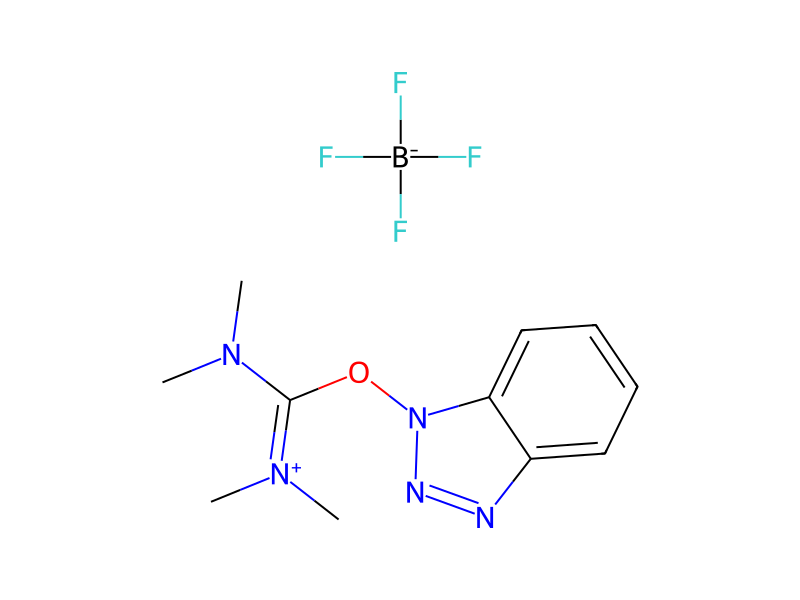
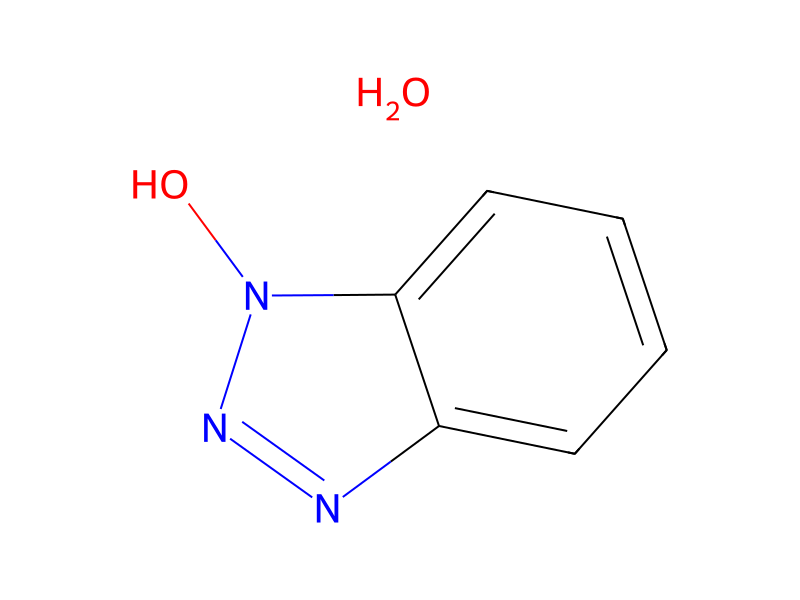
To a stirred solution of 1,4-diazabicyclo[3.2.2]nonane dihydrochloride (120 mg, 0.60 mmol), picolinic acid (85 mg, 0.69 mmol), and diisopropylethylamine (0.45 mL, 2.6 mmol) in dry DMF (2 mL) at ambient temperature was added in succession 1-hydroxybenzotriazole hydrate (85 mg, 0.63 mmol) and TBTU (200 mg, 0.62 mmol). The resulting precipitous mixture was stirred for 12 hours, partitioned between water and chloroform, and extracted with chloroform (3×). The organic layers were combined, washed with water, brine, and dried. The resulting product obtained from concentration of the organic phases was subjected to chromatography on silica gel eluting with a chloroform (ammoniated) to 15% MeOH/chloroform gradient to give (1,4-diazabicyclo[3.2.2]non-4-yl)(pyridin-2-yl)methanone. MS (ES+) 232 (MH+).
Workup
- custompartitioned between water and chloroform
- extractionextracted with chloroform (3×)
- washwashed with water, brine
- customdried
- customThe resulting product obtained from concentration of the organic phases
Sources & evidence
- ORD record
- ord-5b57cb4cb2cc4353bbd0230311c2715f
- Source dataset
- uspto-grants-2009_01
- Patent number
- US07482338B2
Reaction notes
Loading…