Hydrochloric Acid → 3-Benzyloxy-phenylboronic acid
Reaction equation

[CH2:1]([O:8][C:9]1[CH:10]=[C:11](Br)[CH:12]=[CH:13][CH:14]=1)[C:2]1[CH:7]=[CH:6][CH:5]=[CH:4][CH:3]=1.[BH:16]([OH:18])[OH:17].C([Li])CCC.B(OC(C)C)(OC(C)C)OC(C)C.Cl>C1COCC1>[CH2:1]([O:8][C:9]1[CH:10]=[C:11]([B:16]([OH:18])[OH:17])[CH:12]=[CH:13][CH:14]=1)[C:2]1[CH:7]=[CH:6][CH:5]=[CH:4][CH:3]=1Participants
7


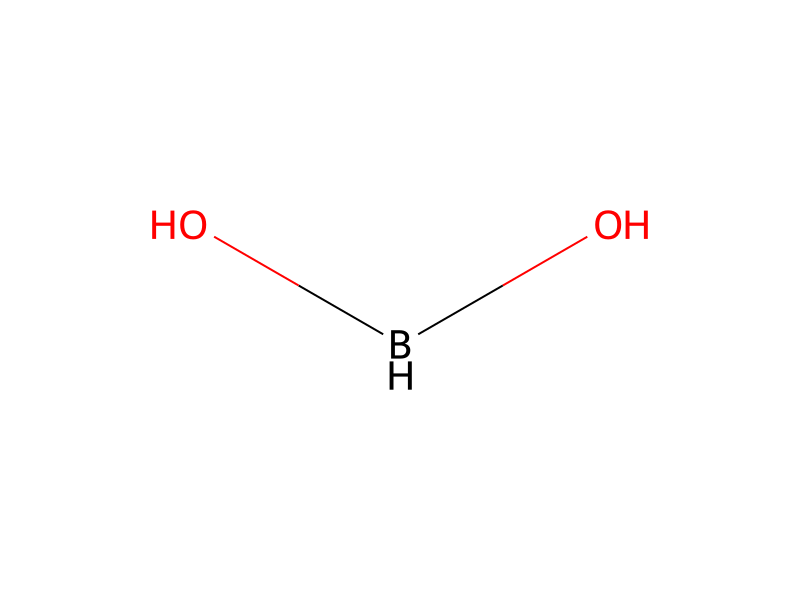




Conditions
- Temperature
- -78 °C
Procedure
The 3-benzyloxybromobenzene of formula IV is converted to the boronic acid derivative by dissolving in THF and adding one equivalent of n-butyllithium at -78° C. After stirring at -78° C. for approximately 30 minutes, one equivalent of triisopropyl borate is added and the reaction is slowly warmed to room temperature, followed by acidification with aqueous hydrochloric acid to give a 3-benzyloxybenzene boronic acid compound of formula V. ##STR7##
Workup
- temperaturethe reaction is slowly warmed to room temperature
Sources & evidence
- ORD record
- ord-471dccf2c1fa46e28376187520642c3c
- Source dataset
- uspto-grants-1998_12
- Patent number
- US05843940
Reaction notes
Loading…