4-Chlorophenol → HCID 19983625, compound
Reaction equation

[CH3:1][C:2]([CH3:8])([C:6]#[CH:7])[CH2:3][CH2:4][OH:5].[Cl:9][C:10]1[CH:15]=[CH:14][C:13](O)=[CH:12][CH:11]=1.C1(P(C2C=CC=CC=2)C2C=CC=CC=2)C=CC=CC=1.N(C(OCC)=O)=NC(OCC)=O>O1CCCC1>[Cl:9][C:10]1[CH:15]=[CH:14][C:13]([O:5][CH2:4][CH2:3][C:2]([CH3:8])([CH3:1])[C:6]#[CH:7])=[CH:12][CH:11]=1Participants
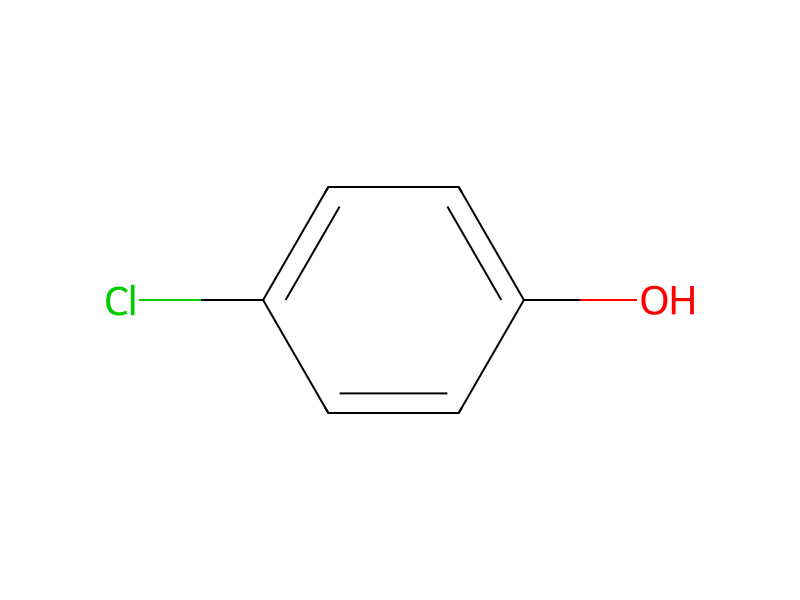





Procedure
To a solution of 5.0 g (44.6 mmol) of 3,3-dimethyl-4-pentyn-1-ol and 5.7 g (44.6 mmol) of 4-chlorophenol in 125 ml of tetrahydrofuran cooled to 0° C. is added 11.7 g (44.6 mmol) of triphenyl phosphine followed by 7.8 g (7.0 ml, 44.6 mmol) of diethyl azodicarboxylate. The reaction mixture is allowed to warm to room temperature and stirred overnight. The solvent is evaporated and the residue triturated with hexane. The solid is filtered, washed with hexane and the resulting filtrate evaporated. The residue is subjected to flash chromatography (silica gel) using hexane as eluting solvent to afford 5.0 g of colorless crystalline solid: m.p. 42°-45° C.; NMR (CDCl3) δ1.3 (6H, s), 1.9 (2H, t, J=6.5 Hz), 2.12 (1H, s), 4.15 (2H, t, J=6.6 Hz), 6.8 (2H, d, J=9.0 Hz), 7.2 (2H, d, J=9.0 Hz).
Workup
- customThe solvent is evaporated
- customthe residue triturated with hexane
- filtrationThe solid is filtered
- washwashed with hexane
- customthe resulting filtrate evaporated
- washas eluting solvent
Sources & evidence
- ORD record
- ord-f4991a6f08934c5bac3e56edd0315bd5
- Source dataset
- uspto-grants-1991_12
- Patent number
- US05070207
Reaction notes
Loading…