Formaldehyde → Dimethyl {[benzyl(hydroxy)amino]methyl}phosphonate
Reaction equation

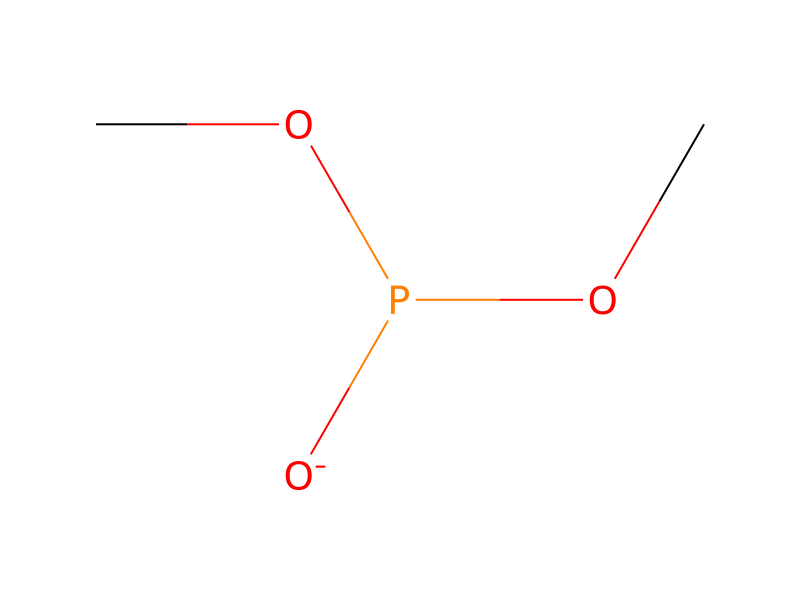
Cl.[CH2:2]([NH:9][OH:10])[C:3]1[CH:8]=[CH:7][CH:6]=[CH:5][CH:4]=1.C=O.[P:13]([O-:18])([O:16][CH3:17])[O:14][CH3:15].[C:19](=O)(O)[O-].[Na+]>C1COCC1>[CH2:2]([N:9]([CH2:19][P:13](=[O:18])([O:16][CH3:17])[O:14][CH3:15])[OH:10])[C:3]1[CH:8]=[CH:7][CH:6]=[CH:5][CH:4]=1Participants
6





Conditions
- Temperature
- 55 °C
Procedure
Using the procedure of Example 1, the above-named compound is prepared from 5.0 g (31 mmol) of N-benzylhydroxylamine hydrochloride, 1.8 g (60 mmol) of paraformaldehyde, 3.7 ml (40 mmol) of dimethyl phosphite, 2.5 g (30 mmol) of sodium bicarbonate and 350 ml of THF by heating at 55° C. for seven hours. The residue is purified by column chromatography (silica gel, methylene chloride: ethyl acetate eluent) to give 6.1 g (80% yield) of a viscous colorless liquid.
Workup
- customThe residue is purified by column chromatography (silica gel, methylene chloride: ethyl acetate eluent)
Sources & evidence
- ORD record
- ord-2eece80b6fa847549995c310abe10255
- Source dataset
- uspto-grants-1991_12
- Patent number
- US05077329
Reaction notes
Loading…