Hydrochloric Acid → 3,5-Dichloroaniline
Reaction equation

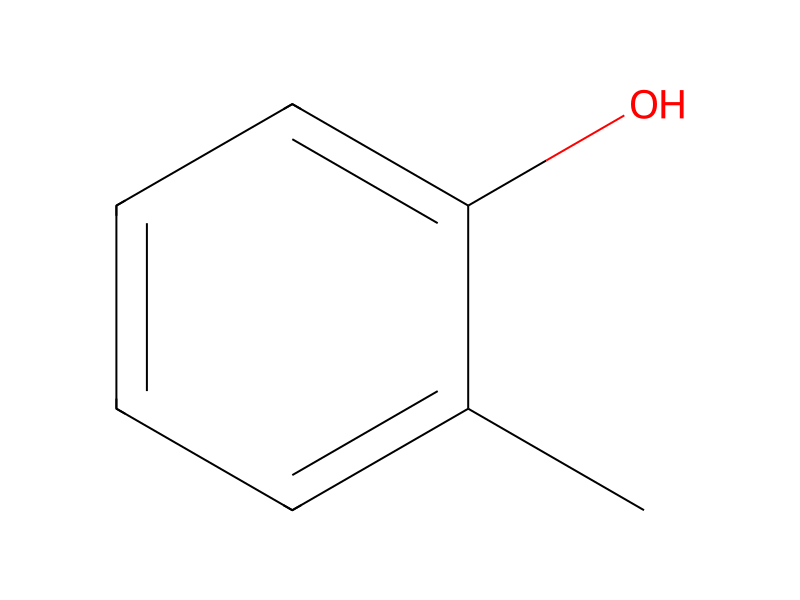
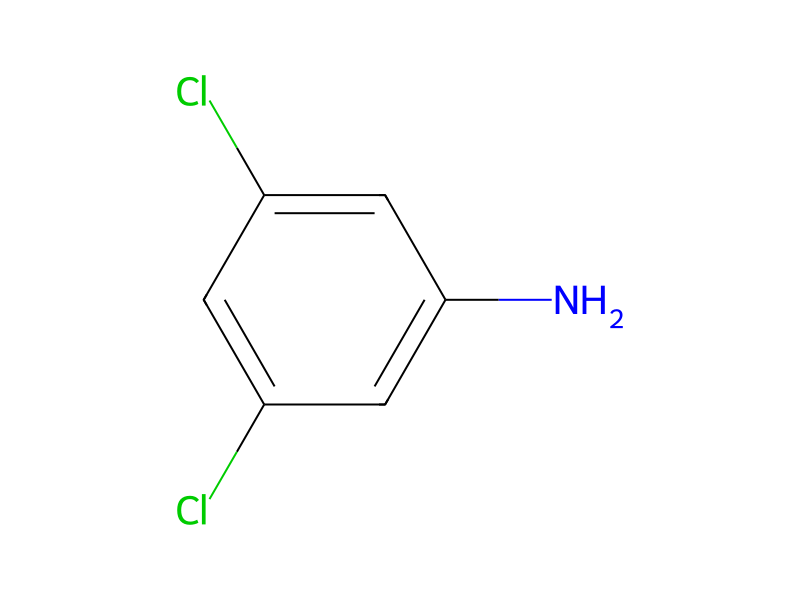
ClC1C(Cl)=C(C=CC=1)N(Cl)Cl.Cl[C:13]1[C:18]([NH2:19])=[C:17](Cl)[C:16]([Cl:21])=[C:15](Cl)[C:14]=1[Cl:23].C1(C)C(O)=CC=CC=1.Cl.[H][H].[OH-].[Na+]>[Pd].C.[Ta].O.C1(C)C=CC=CC=1>[Cl:21][C:16]1[CH:17]=[C:18]([CH:13]=[C:14]([Cl:23])[CH:15]=1)[NH2:19]Participants
Reactant 5




Product 1
Reagents, catalysts & solvents 4



Procedure
131 parts of a tetrachloroaniline/pentachloroaniline isomer mixture (according to Example 2), 200 parts of o-cresol and 20 parts of a Pd/charcoal catalyst (1% strength) and 5 parts of concentrated hydrochloric acid are reacted with hydrogen at 175° C. and under 50 bar in a tantalum autoclave, in the course of 10 hours. After the autoclave has been cooled and the pressure released, the mixture is rendered alkaline with 200 parts of toluene, 400 parts of water and 250 parts of aqueous concentrated sodium hydroxide solution, and is heated to the boil, and thereafter the catalyst is separated off by filtering under suction. After extracting the aqueous alkaline phase by shaking with toluene, the toluene solutions of 3,5-dichloroaniline are distilled. 85 parts of a 98% strength 3,5-dichloroaniline, bp. 130°-136°/18 mbar, are obtained.
Workup
- temperatureAfter the autoclave has been cooled
- temperatureis heated to the boil
- customthe catalyst is separated off
- filtrationby filtering under suction
- extractionAfter extracting the aqueous alkaline phase
- distillationthe toluene solutions of 3,5-dichloroaniline are distilled
Sources & evidence
- ORD record
- ord-b070175815444e8b908c6f5f0f8edd78
- Source dataset
- uspto-grants-1984_07
- Patent number
- US04460788
Reaction notes
Loading…