Diethyl Malonate → diethyl 2-[(4-nitrophenyl)methyl]propanedioate
Reaction equation

C([N-]C(C)C)(C)C.[Li+].[CH2:9]([O:11][C:12](=[O:19])[CH2:13][C:14]([O:16][CH2:17][CH3:18])=[O:15])[CH3:10].[N+:20]([C:23]1[CH:30]=[CH:29][C:26]([CH2:27]Br)=[CH:25][CH:24]=1)([O-:22])=[O:21]>O1CCCC1>[CH2:9]([O:11][C:12](=[O:19])[CH:13]([CH2:27][C:26]1[CH:29]=[CH:30][C:23]([N+:20]([O-:22])=[O:21])=[CH:24][CH:25]=1)[C:14]([O:16][CH2:17][CH3:18])=[O:15])[CH3:10]Participants
Reactant 3
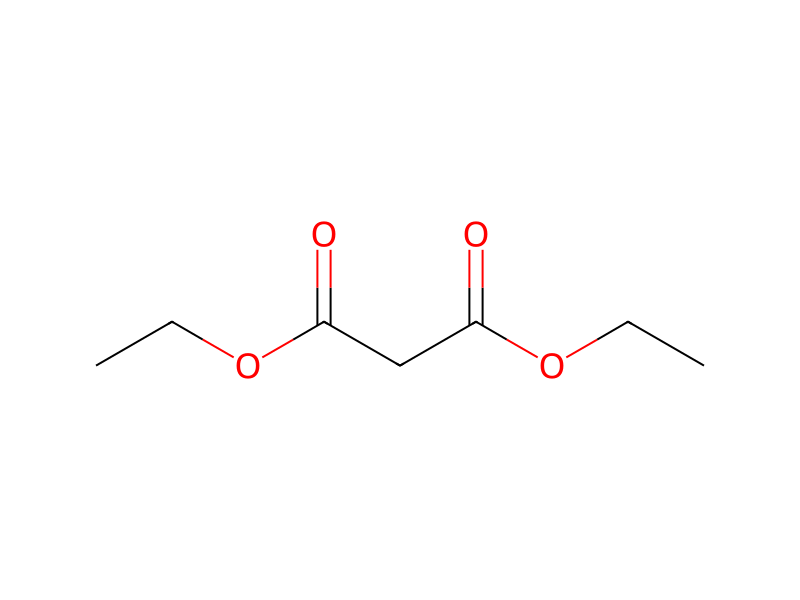


Product 1

Reagents, catalysts & solvents 1

Conditions
- Temperature
- -62 °C
Procedure
21.4 g of lithium diisopropyl amide was added to 210 ml anhydrous tetrahydrofuran in a stream of nitrogen in a dry 3-necked flask with a drying tube and dropping funnel with pressure compensation. Next, 58.0 g of malonic acid diethyl ester in 100 ml anhydrous tetrahydrofuran was added dropwise at room temperature in 40 minutes. After 30 minutes the reaction solution was cooled to -62° C. and 39.1 g of 4-nitrobenzyl bromide in tetrahydrofuran was slowly added dropwise with vigorous agitation, followed by agitation for a further hour at -62° C., after which the precipitate was filtered cold. The filtrate was concentrated in a rotary evaporator, and the residue was dissolved in 300 ml ethanol at 65° C. and separated from the insoluble residue. 34.7 g of faintly yellowish crystals were obtained after cooling.
Workup
- waitfollowed by agitation for a further hour at -62° C.
- filtrationafter which the precipitate was filtered cold
- concentrationThe filtrate was concentrated in a rotary evaporator
- dissolutionthe residue was dissolved in 300 ml ethanol at 65° C.
- customseparated from the insoluble residue
- custom34.7 g of faintly yellowish crystals were obtained
- temperatureafter cooling
Sources & evidence
- ORD record
- ord-3da41bfd164b48d0bf8b0755d3624442
- Source dataset
- uspto-grants-1994_04
- Patent number
- US05302370
Reaction notes
Loading…