1-Bromo-4-fluorobenzene → HCID 68170292, compound
Reaction equation

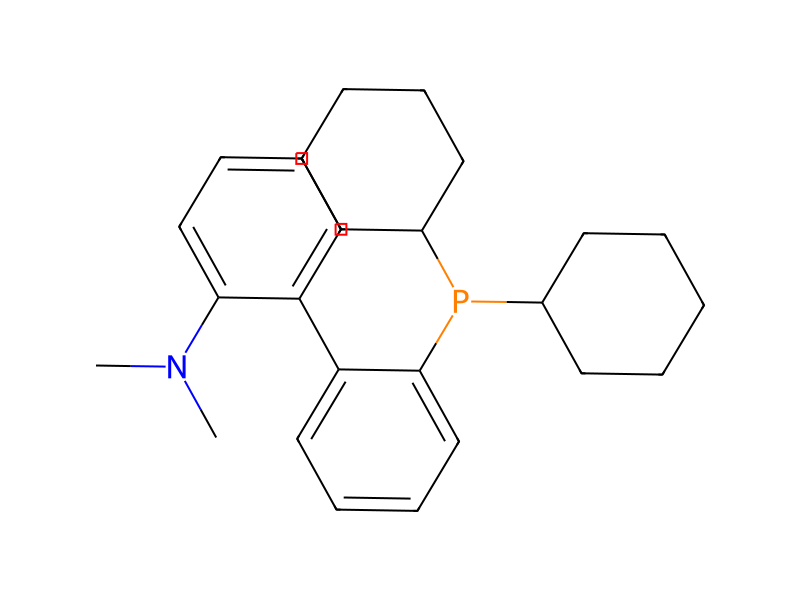
[CH:1]1([CH2:6][C:7]([O:9][C:10]([CH3:13])([CH3:12])[CH3:11])=[O:8])[CH2:5][CH2:4][CH2:3][CH2:2]1.C[Si](C)(C)[N-][Si](C)(C)C.[Li+].Br[C:25]1[CH:30]=[CH:29][C:28]([F:31])=[CH:27][CH:26]=1.C1(P(C2CCCCC2)C2C=CC=CC=2C2C=CC=CC=2N(C)C)CCCCC1>C([O-])(=O)C.[Pd+2].C([O-])(=O)C.C1(C)C=CC=CC=1>[CH:1]1([CH:6]([C:25]2[CH:30]=[CH:29][C:28]([F:31])=[CH:27][CH:26]=2)[C:7]([O:9][C:10]([CH3:13])([CH3:12])[CH3:11])=[O:8])[CH2:5][CH2:4][CH2:3][CH2:2]1Participants
Reactant 4



Product 1

Reagents, catalysts & solvents 2


Procedure
Under argon, a solution of 2.0 g (10.85 mmol) of tert-butyl cyclopentylacetate in 5 ml of abs. toluene was added dropwise to 16.3 ml of a 1 M solution, cooled to −10° C., of lithium hexamethyl-disilazide in toluene (16.3 mmol). After 10 min at −10° C., the ice bath was removed and the mixture was warmed to RT. A mixture of 2.47 g (14.1 mmol) of 1-bromo-4-fluorobenzene, 73.1 mg (0.326 mmol) of palladium(II) acetate and 269 mg (0.684 mmol) of 2-dicyclohexylphosphino-2′-(N,N-dimethylamino)biphenyl in 10 ml of abs. toluene was then added to this reaction mixture. After 1 h at RT, the reaction mixture was stirred at 80° C. overnight. After cooling to RT, the precipitated salts were filtered off with suction, the residue was washed with toluene and the combined filtrates were concentrated under reduced pressure. The crude product obtained was purified chromatographically on silica gel (mobile phase first cyclohexane, then cyclohexane/ethyl acetate 50:1). This gave 2.0 g of the title compound (61.6% of theory).
Workup
- customthe ice bath was removed
- waitAfter 1 h at RT
- temperatureAfter cooling to RT
- filtrationthe precipitated salts were filtered off with suction
- washthe residue was washed with toluene
- concentrationthe combined filtrates were concentrated under reduced pressure
Sources & evidence
- ORD record
- ord-eb257e6954d24ad5a7a4d4ddfc453a88
- Source dataset
- uspto-grants-2015_04
- Patent number
- US09018258B2
Reaction notes
Loading…