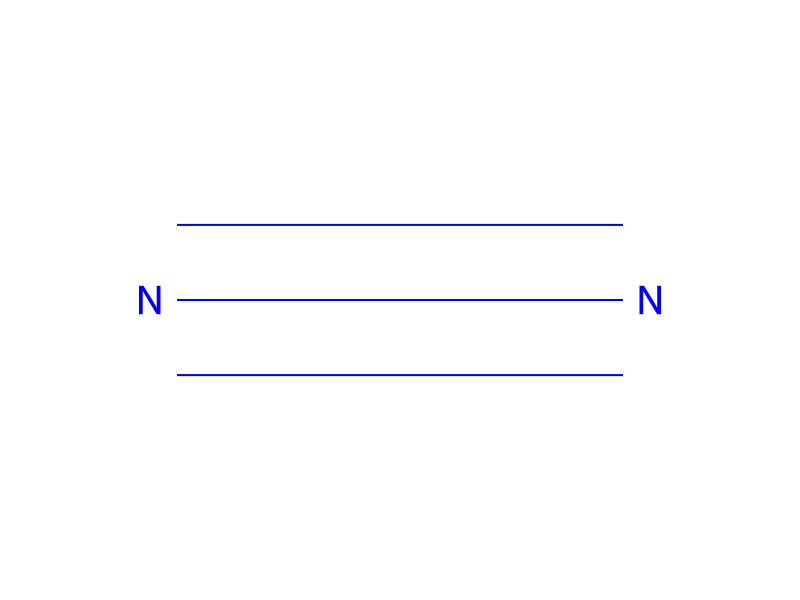
Nitrogen → Isopropyl 4-(3-bromopyrazolo[1,5-a]pyrimidin-5-yl)piperazine-1-carboxylate
Reaction equation

N#N.[Br:3][C:4]1[CH:5]=[N:6][N:7]2[CH:12]=[CH:11][C:10]([N:13]3[CH2:18][CH2:17][NH:16][CH2:15][CH2:14]3)=[N:9][C:8]=12.CCN(C(C)C)C(C)C.Cl[C:29]([O:31][CH:32]([CH3:34])[CH3:33])=[O:30]>C(OCC)(=O)C.C1(C)C=CC=CC=1>[CH:32]([O:31][C:29]([N:16]1[CH2:17][CH2:18][N:13]([C:10]2[CH:11]=[CH:12][N:7]3[N:6]=[CH:5][C:4]([Br:3])=[C:8]3[N:9]=2)[CH2:14][CH2:15]1)=[O:30])([CH3:34])[CH3:33]Participants
Reactant 4



Product 1

Reagents, catalysts & solvents 2


Conditions
- Temperature
- 0 °C
Procedure
To a rapidly stirred, 0° C., N2 blanketed, solution of 3-bromo-5-piperazin-1-yl-pyrazolo[1,5-a]pyrimidine (15.8 g, 56.0 mmol) and Hunig's base [7087-68-5] (20.0 mL, 114.8 mmol) in ethyl acetate (280 mL) was steadily added a 1.0M solution of isopropyl chloroformate in toluene (67.0 mL) over the course of 10 minutes. The reaction was allowed to stir and warm to ambient temperature over night at which time it was washed with brine, dried (MgSO4), preloaded onto silica gel, chromatographed (Silica gel, eluted with 100% ethyl acetate) and crystallized from ethyl acetate/heptane to afford 13.2 g of white powder, mp. 78-79° C. 1H NMR (400 MHz, DMSO-d6) δ ppm 1.22 (d, J=6.32 Hz, 6 H) 3.44-3.54 (m, 4 H) 3.67-3.79 (m, 4 H) 4.82 (spt, J=6.23 Hz, 1 H) 6.77 (d, J=7.83 Hz, 1 H) 7.97 (s, 1 H) 8.69 (d, J=7.83 Hz, 1 H). 13C NMR (100 MHz, DMSO-d6) δ ppm 21.94, 42.80, 43.87, 68.17, 77.32, 97.66, 136.47, 143.87, 144.40, 154.29, 155.64. LRMS (ESI) m/z 368.0/370.0 [(M+H)]+, calc'd for C14H18BrN5O2: 368.24.
Workup
- stirringto stir
- temperaturewarm to ambient temperature over night at which time it
- washwas washed with brine
- dry with materialdried (MgSO4)
- customchromatographed
- wash(Silica gel, eluted with 100% ethyl acetate)
- customcrystallized from ethyl acetate/heptane
Sources & evidence
- ORD record
- ord-ba3012f927ce44469c851b2c43f0dbdf
- Source dataset
- uspto-grants-2016_08
- Patent number
- US09403832B2
Reaction notes
Loading…