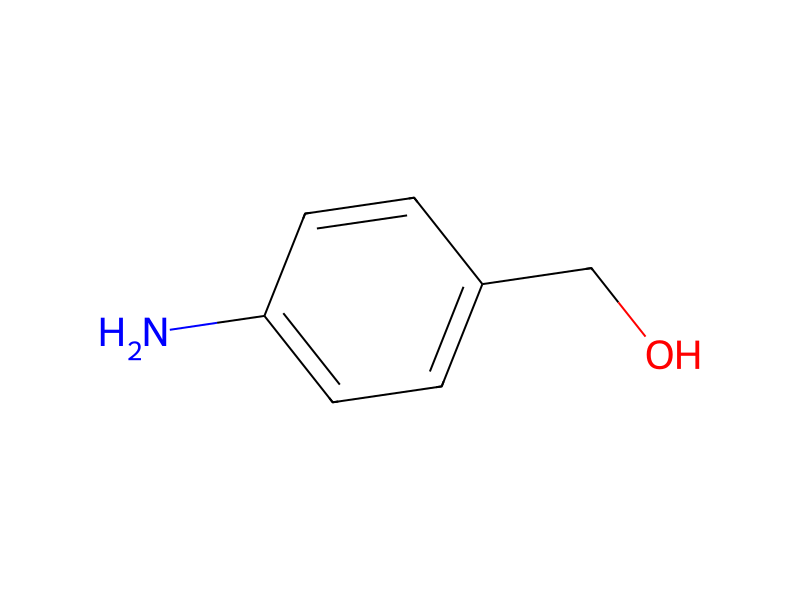
4-Aminobenzyl alcohol → HCID 86714204, compound
Reaction equation

[CH:1]1([OH:9])[CH2:8][CH2:7][CH2:6][CH2:5][CH2:4][CH:3]=[CH:2]1.C([N:13]([CH:16]([CH3:18])[CH3:17])[CH2:14]C)(C)C.[OH:19]N1C2C=CC=CC=2N=N1.NC1C=[CH:36][C:33]([CH2:34][OH:35])=[CH:32]C=1>C1COCC1>[CH:1]1([O:9][C:14](=[O:19])[NH:13][C:16]2[CH:17]=[CH:36][C:33]([CH2:34][OH:35])=[CH:32][CH:18]=2)[CH2:8][CH2:7][CH2:6][CH2:5][CH2:4][CH:3]=[CH:2]1Participants
6





Procedure
In a similar fashion, the PNP-derivative 34 derived from the major alcohol 31 (145 mg, 0.498 mmol) in 6.0 g THF, was reacted with diisopropylethylamine (210 mg, 1.63 mmol), 1-hydroxybenzotriazole (34 mg, 0.251 mmol) and 4-aminobenzylalcohol (128 mg, 1.04 mmol) for 3 days at ca. 30° C. Rotary evaporation and chromatography yielded the product major-35 as a viscous oil (110 mg, 0.40 mmol, 80%).
Workup
- customRotary evaporation and chromatography
Sources & evidence
- ORD record
- ord-e098d0bb0f8b42bc9e7a25105993d39e
- Source dataset
- uspto-grants-2016_08
- Patent number
- US09421274B2
Reaction notes
Loading…