Ethyl Bromide → N-(3-chloro-1-(pyridin-3-yl)-1H-pyrazol-4-yl)-N-ethylacetamide
Reaction equation

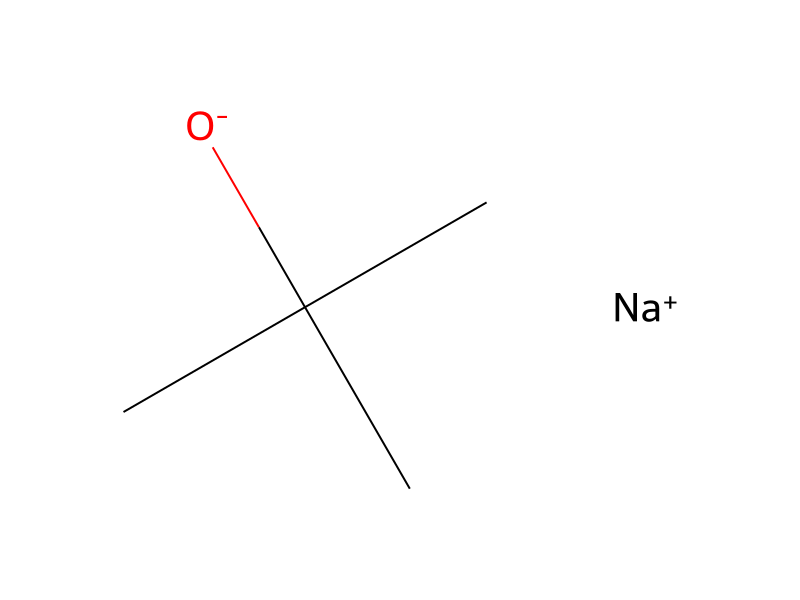
[Cl:1][C:2]1[C:6]([NH:7][C:8](=[O:10])[CH3:9])=[CH:5][N:4]([C:11]2[CH:12]=[N:13][CH:14]=[CH:15][CH:16]=2)[N:3]=1.[CH2:17](Br)[CH3:18].[H-].[Na+].CC(C)([O-])C.[Na+]>O1CCCC1>[Cl:1][C:2]1[C:6]([N:7]([CH2:17][CH3:18])[C:8](=[O:10])[CH3:9])=[CH:5][N:4]([C:11]2[CH:12]=[N:13][CH:14]=[CH:15][CH:16]=2)[N:3]=1Participants
Reactant 4



Product 1

Reagents, catalysts & solvents 1

Procedure
In step 2d, N-(3-chloro-1-(pyridin-3-yl)-1H-pyrazol-4-yl)acetamide (2-8) is alkylated with ethyl bromide (EtBr) in the presence of a base, such as sodium hydride (NaH) or sodium tert-butoxide (NaOt-Bu), in a polar aprotic solvent, such as tetrahydrofuran, at temperatures from about 20° C. to about 40° C., over a period of time of about 60 hours to about 168 hours, to yield N-(3-chloro-1-(pyridin-3-yl)-1H-pyrazol-4-yl)-N-ethylacetamide (2-9). It has been discovered that use of an iodide additive, such as potassium iodide (KI) or tetrabutylammonium iodide (TBAI) can decrease the time necessary for the reaction to occur to about 24 hours. It has also been discovered that heating the reaction at about 50° C. to about 70° C. in a sealed reactor (to prevent loss of ethyl bromide) also decreases the reaction time to about 24 hours.
Sources & evidence
- ORD record
- ord-ad13099dac8f4cf9b3e5f4ccd5150e3c
- Source dataset
- uspto-grants-2016_08
- Patent number
- US09422265B2
Reaction notes
Loading…