2-Chloro-5-nitropyridine → 1-Ethyl-4-(5-nitropyridin-2-yl)piperazine
Reaction equation

Cl[C:2]1[CH:7]=[CH:6][C:5]([N+:8]([O-:10])=[O:9])=[CH:4][N:3]=1.[CH2:11]([N:13]1[CH2:18][CH2:17][NH:16][CH2:15][CH2:14]1)[CH3:12].C(N(CC)C(C)C)(C)C>O1CCOCC1.C(OCC)(=O)C>[CH2:11]([N:13]1[CH2:18][CH2:17][N:16]([C:2]2[CH:7]=[CH:6][C:5]([N+:8]([O-:10])=[O:9])=[CH:4][N:3]=2)[CH2:15][CH2:14]1)[CH3:12]Participants
6

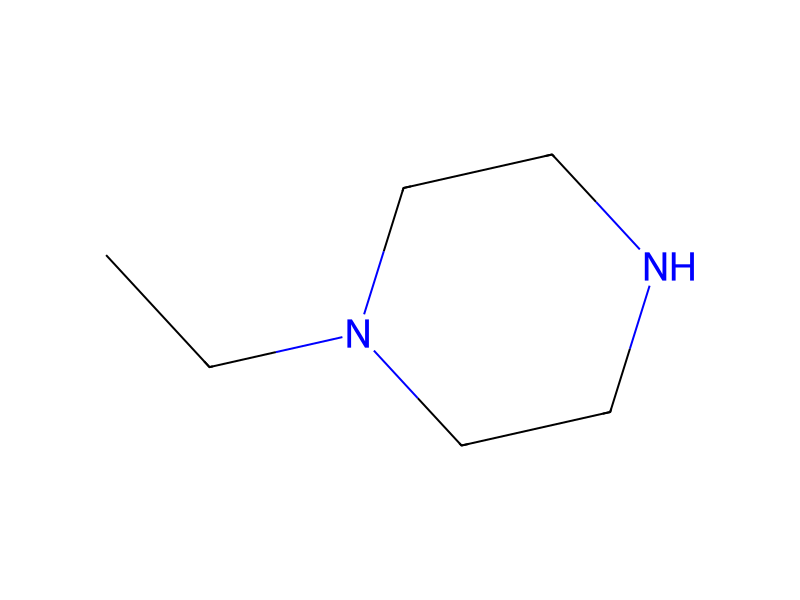




Conditions
- Temperature
- 70 °C
Procedure
2-Chloro-5-nitropyridine (800 mg, 5.05 mmol) was dissolved in dioxane (20 mL) and then 1-ethylpiperazine (1.7 g, 15.15 mmol) and N,N-diisopropylethylamine (927 mL, 5.05 mmol) were added. The reaction mixture solution was stirred at 70° C. for a day. The reaction solution was cooled to room temperature, diluted with ethyl acetate, and then washed with brine. The organic layer was concentrated by drying with magnesium sulfate. The target compound (1.05 g, 87% yield) was used in the following reaction without purification.
Workup
- temperatureThe reaction solution was cooled to room temperature
- washwashed with brine
- concentrationThe organic layer was concentrated
- dry with materialby drying with magnesium sulfate
Sources & evidence
- ORD record
- ord-9d618501bbbb48b1ac2129bfe2c05047
- Source dataset
- uspto-grants-2016_08
- Patent number
- US09422307B2
Reaction notes
Loading…