Triphenylphosphine → 4-nitro-1-(tetrahydro-2H-pyran-4-yl)-1H-pyrazole
Reaction equation

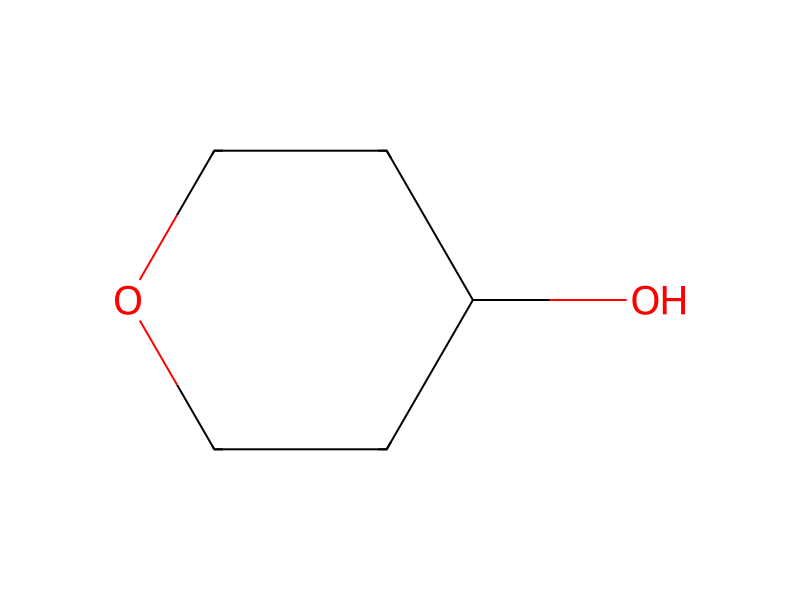
[O:1]1[CH2:6][CH2:5][CH:4](O)[CH2:3][CH2:2]1.[N+:8]([C:11]1[CH:12]=[N:13][NH:14][CH:15]=1)([O-:10])=[O:9].C1(P(C2C=CC=CC=2)C2C=CC=CC=2)C=CC=CC=1.N(C(OC(C)C)=O)=NC(OC(C)C)=O>C1COCC1>[N+:8]([C:11]1[CH:12]=[N:13][N:14]([CH:4]2[CH2:5][CH2:6][O:1][CH2:2][CH2:3]2)[CH:15]=1)([O-:10])=[O:9]Participants
6





Procedure
To a stirred solution of tetrahydro-2H-pyran-4-ol (1 equiv), 4-nitro-1H-pyrazole (1 equiv) and triphenylphosphine (1.2 equiv) in THF (1.0 M) was added diisopropyl azodicarboxylate (1.5 equiv) in THF (2.0 M) at 0° C. The mixture was stirred at room temperature overnight. The crude product was purified by silica gel chromatography (2.5% MeOH in DCM) to afford the desired product (23% yield) as a white solid. MS (ESI) m/z 198.1 [M+H]+.
Workup
- customThe crude product was purified by silica gel chromatography (2.5% MeOH in DCM)
Sources & evidence
- ORD record
- ord-127625a3e89d42c89eaccc9869c9bbb3
- Source dataset
- uspto-grants-2016_08
- Patent number
- US09428509B2
Reaction notes
Loading…