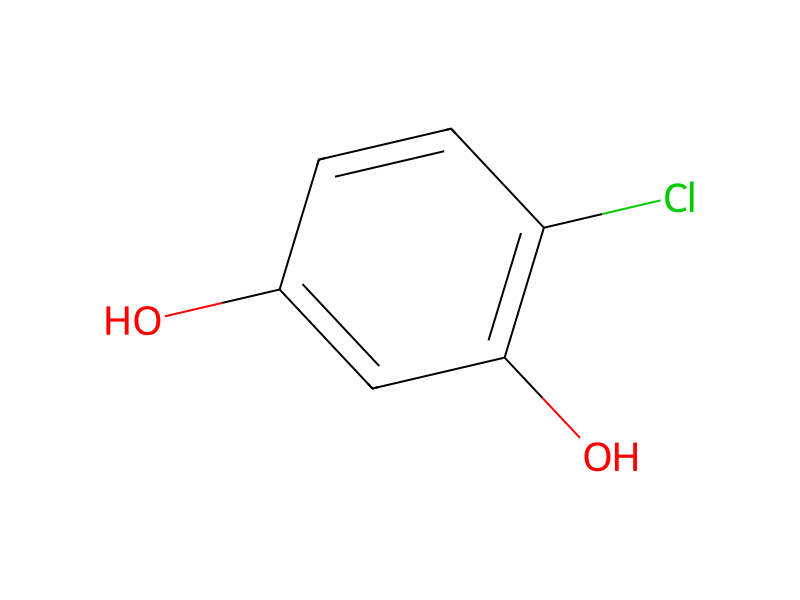
4-Chlororesorcinol → HCID 86743097, compound
Reaction equation

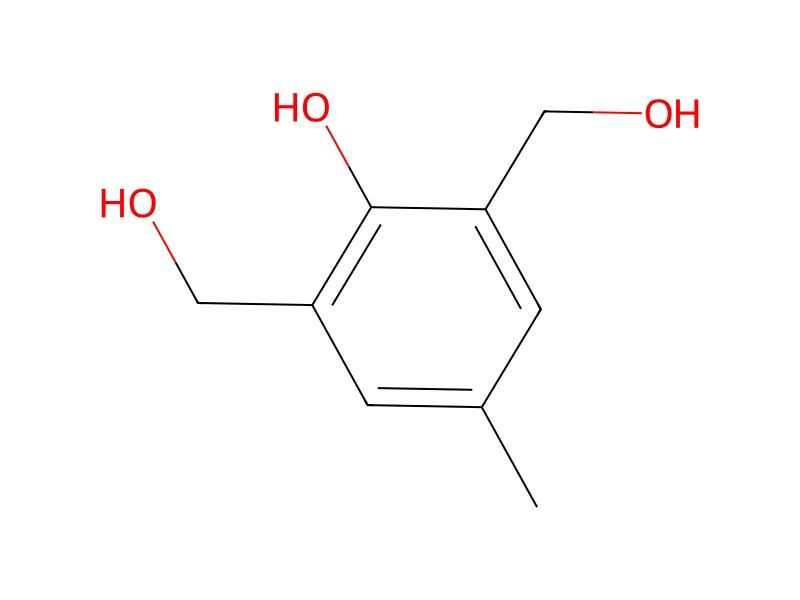
[OH:1][CH2:2][C:3]1[C:8]([OH:9])=[C:7]([CH2:10][OH:11])[CH:6]=[C:5]([CH3:12])[CH:4]=1.[Cl:13][C:14]1[CH:20]=[CH:19][C:17]([OH:18])=[CH:16][C:15]=1[OH:21].O.C1(C)C=CC(S(O)(=O)=O)=CC=1>>[OH:11][CH2:10][C:7]1[C:8]([OH:9])=[C:3]([CH2:2][OH:1])[CH:4]=[C:5]([CH3:12])[CH:6]=1.[Cl:13][C:14]1[CH:20]=[CH:19][C:17]([OH:18])=[CH:16][C:15]=1[OH:21]Participants
4


Procedure
2,6-Bis(hydroxymethyl)-p-cresol (25.00 g, 0.149 moles), 4-chlororesorcinol (13.96 g, 0.09 moles) and p-toluenesulfonic acid monohydrate (0.67 g, 0.0035 moles) were reacted four hours isolated as described in Synthesis Example 3 to yield 35 g of novolak. See Tables 1 and 2 for glass transition and alkaline dissolution data. The ortho-, ortho-linkages of the alternating copolymers and the terminal groups were identified by 13C NMR analysis.
Workup
- customisolated
- customas described in Synthesis Example 3
- customto yield 35 g of novolak
- dissolutionfor glass transition and alkaline dissolution data
Sources & evidence
- ORD record
- ord-29900308dc8640cab29fe3b48fbd907e
- Source dataset
- uspto-grants-1991_06
- Patent number
- US05024921
Reaction notes
Loading…