Cesium carbonate → tert-Butyl (2-bromo-5-formylpyridin-4-yl)carbamate
Reaction equation

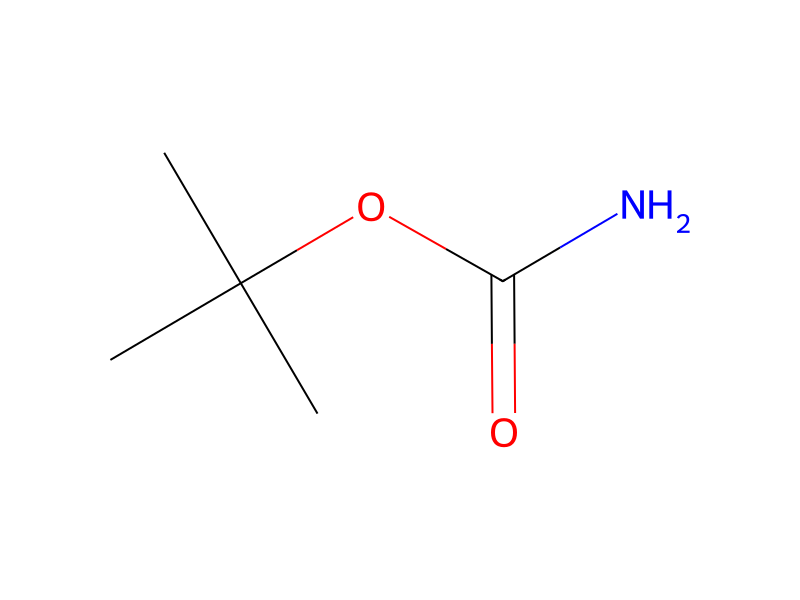
[Br:1][C:2]1[CH:9]=[C:8](I)[C:5]([CH:6]=[O:7])=[CH:4][N:3]=1.[C:11](=[O:18])([O:13][C:14]([CH3:17])([CH3:16])[CH3:15])[NH2:12].C1(P(C2C=CC=CC=2)C2C3OC4C(=CC=CC=4P(C4C=CC=CC=4)C4C=CC=CC=4)C(C)(C)C=3C=CC=2)C=CC=CC=1.C(=O)([O-])[O-].[Cs+].[Cs+]>O1CCOCC1.C(OCC)(=O)C.C([O-])(=O)C.[Pd+2].C([O-])(=O)C>[Br:1][C:2]1[CH:9]=[C:8]([NH:12][C:11](=[O:18])[O:13][C:14]([CH3:17])([CH3:16])[CH3:15])[C:5]([CH:6]=[O:7])=[CH:4][N:3]=1Participants
Reactant 4



Product 1

Reagents, catalysts & solvents 3



Conditions
- Temperature
- 90 °C
Procedure
A mixture of 6-bromo-4-iodonicotinaldehyde (50 mg, 0.2 mmol), tert-butyl carbamate (28 mg, 0.24 mmol), 4,5-bis(diphenylphosphino)-9,9-dimethylxanthene (18 mg, 0.03 mmol), palladium acetate (5 mg, 0.02 mmol), and cesium carbonate (100 mg, 0.32 mmol) in 1,4-dioxane (1 mL) was heated at 90° C. for 1 hour. The cooled reaction mixture was diluted with ethyl acetate (50 mL) and washed with water (100 mL). The organic layer was separated, dried over sodium sulfate, filtered, and evaporated in vacuo to afford a residue that was purified by flash chromatography (silica, 4 g, ISCO, 0-50% ethyl acetate in heptane) to afford the title compound as a white solid (18 mg, 40%). 1H NMR (400 MHz, CDCl3) δ 10.42 (s, 1H), 9.93 (s, 1H), 8.61 (s, 1H), 8.50 (s, 1H), 1.55 (s, 9H).
Workup
- customThe cooled reaction mixture
- washwashed with water (100 mL)
- customThe organic layer was separated
- dry with materialdried over sodium sulfate
- filtrationfiltered
- customevaporated in vacuo
- customto afford a residue that
- customwas purified by flash chromatography (silica, 4 g, ISCO, 0-50% ethyl acetate in heptane)
Sources & evidence
- ORD record
- ord-88bbc236eb3243459ae45e0de024fef8
- Source dataset
- uspto-grants-2015_12
- Patent number
- US09206175B2
Reaction notes
Loading…