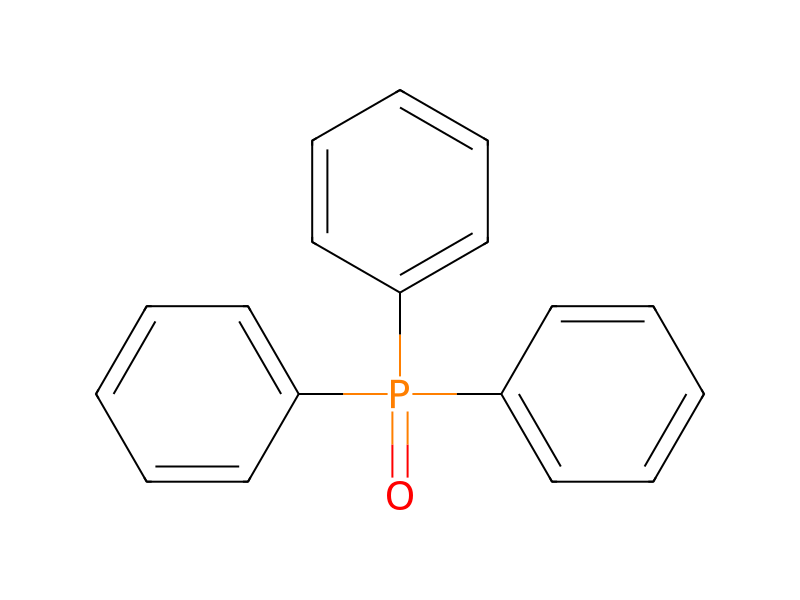
Dichloromethane → Triphenylphosphine Oxide
Reaction equation

[CH:1]1([S:4][CH2:5][CH2:6][CH2:7][OH:8])[CH2:3][CH2:2]1.C(Br)(Br)(Br)[Br:10].[C:14]1([P:20]([C:27]2[CH:32]=[CH:31][CH:30]=[CH:29][CH:28]=2)[C:21]2[CH:26]=[CH:25][CH:24]=[CH:23][CH:22]=2)[CH:19]=[CH:18][CH:17]=[CH:16][CH:15]=1.ClCCl>CCCCC>[Br:10][CH2:7][CH2:6][CH2:5][S:4][CH:1]1[CH2:3][CH2:2]1.[CH:30]1[CH:31]=[CH:32][C:27]([P:20]([C:14]2[CH:15]=[CH:16][CH:17]=[CH:18][CH:19]=2)([C:21]2[CH:26]=[CH:25][CH:24]=[CH:23][CH:22]=2)=[O:8])=[CH:28][CH:29]=1Participants
7






Procedure
To a suspension of 3-(cyclopropylthio)propan-1-ol (1.68 g, 12.7 mmol) and CBr4 (5.06 g, 15.2 mmol) in pentane (13 ml) was added triphenylphosphine (4.00 g, 15.2 mmol) portionwise under icecooling. Dichloromethane (7 ml) was added and the suspension was stirred for 4 hours. The reaction mixture was filtered and washed with pentane. The obtained solution was concentrated in vacuo. The title compound was obtained as a mixture with TPPO as brown semisolid (6.66 g). The material was used without further purification.
Workup
- filtrationThe reaction mixture was filtered
- washwashed with pentane
- concentrationThe obtained solution was concentrated in vacuo
Sources & evidence
- ORD record
- ord-db8f180bf8ab407c824c81980b81e9a7
- Source dataset
- uspto-grants-2015_12
- Patent number
- US09221816B2
Reaction notes
Loading…