3-Hydroxybenzaldehyde → 3-Isopropoxybenzaldehyde
Reaction equation

[OH:1][C:2]1[CH:3]=[C:4]([CH:7]=[CH:8][CH:9]=1)[CH:5]=[O:6].I[CH:11]([CH3:13])[CH3:12].C(=O)([O-])[O-].[K+].[K+].O>C(O)(C)C>[CH:11]([O:1][C:2]1[CH:3]=[C:4]([CH:7]=[CH:8][CH:9]=1)[CH:5]=[O:6])([CH3:13])[CH3:12]Participants
6
Reactant 4
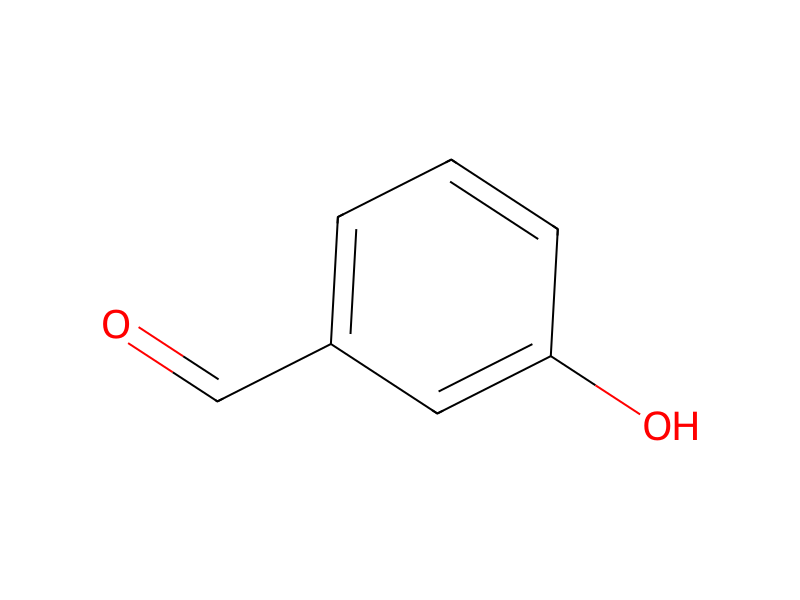



Product 1

Reagents, catalysts & solvents 1

Procedure
To a 1 molar solution of 3-hydroxybenzaldehyde (10 g, 0.819 moles) in isopropyl alcohol (820 mL) was added 2-iodopropane (146.2 g, 0.860 moles) followed by powdered potassium carbonate (339.5 g, 0.457 moles) and the mixture was heated to reflux under nitrogen for a minimum of 8 hrs. The reaction was complete by TLC. Water was added to the cooled reaction until all salts were dissolved. The mixture was extracted with ether three times. The combined ether extracts were washed with water, 2 M NaOH and again with water until clear (three times) then brine. The organic layer was dried over magnesium sulfate and filtered and evaporated to give the desired product as a pale oil.
Workup
- temperaturethe mixture was heated
- temperatureto reflux under nitrogen for a minimum of 8 hrs
- dissolutionwere dissolved
- extractionThe mixture was extracted with ether three times
- washThe combined ether extracts were washed with water, 2 M NaOH and again with water until clear (three times)
- dry with materialThe organic layer was dried over magnesium sulfate
- filtrationfiltered
- customevaporated
Sources & evidence
- ORD record
- ord-426c0bfec0ed48ae87e5a05159984306
- Source dataset
- uspto-grants-2012_07
- Patent number
- US08211904B2
Reaction notes
Loading…