Diisopropylethylamine → 5-bromo-2-chloro-N-(5-cyclopropyl-1H-pyrazol-3-yl)pyrimidin-4-amine
Reaction equation

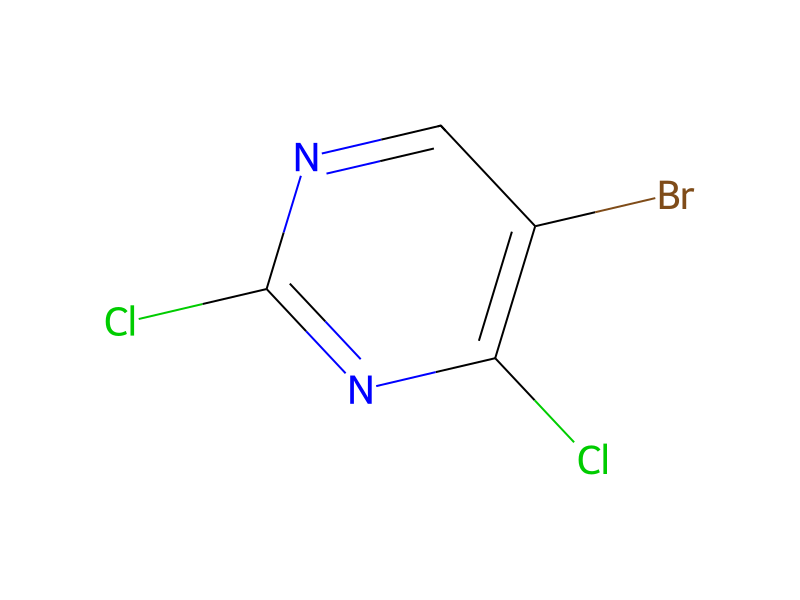
[Br:1][C:2]1[C:3](Cl)=[N:4][C:5]([Cl:8])=[N:6][CH:7]=1.[CH:10]1([C:13]2[NH:17][N:16]=[C:15]([NH2:18])[CH:14]=2)[CH2:12][CH2:11]1.C(N(C(C)C)CC)(C)C>C(O)CCC>[Br:1][C:2]1[C:3]([NH:18][C:15]2[CH:14]=[C:13]([CH:10]3[CH2:12][CH2:11]3)[NH:17][N:16]=2)=[N:4][C:5]([Cl:8])=[N:6][CH:7]=1Participants
5




Conditions
- Temperature
- 80 °C
Procedure
A mixture of 5-bromo-2,4-dichloropyrimidine (15.4 g, 67.6 mmol), 5-cyclopropyl-1H-pyrazol-3-ylamine (10.0 g, 81.3 mmol) and diisopropylethylamine (17 mL, 102 mmol) in 1-butanol (150 mL) was heated to 80° C. for 1 h. The solid that formed was collected by filtration and washed with acetonitrile to give the desired product (15.8 g, 75%) as a white solid.
Workup
- customThe solid that formed
- filtrationwas collected by filtration
- washwashed with acetonitrile
Sources & evidence
- ORD record
- ord-60f9d599bbde419b96dc3728f62c00d4
- Source dataset
- uspto-grants-2012_07
- Patent number
- US08211929B2
Reaction notes
Loading…