Hydrochloric Acid → 2,6-Dichloro-4-hydroxybenzaldehyde
Reaction equation

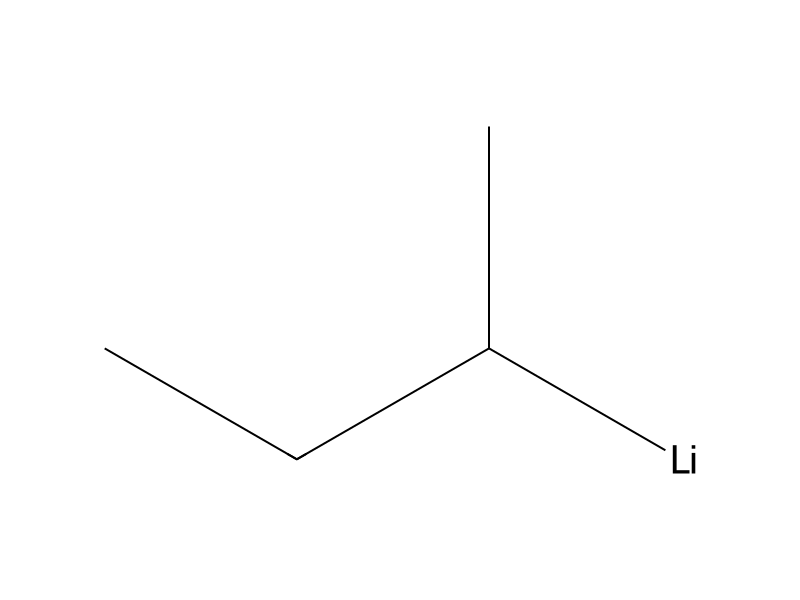
C([Si]([O:8][C:9]1[CH:14]=[C:13]([Cl:15])[CH:12]=[C:11]([Cl:16])[CH:10]=1)(C)C)(C)(C)C.[Li]C(CC)C.CN([CH:25]=[O:26])C.Cl>C1COCC1.C1CCCCC1>[Cl:16][C:11]1[CH:10]=[C:9]([OH:8])[CH:14]=[C:13]([Cl:15])[C:12]=1[CH:25]=[O:26]Participants
7






Conditions
- Temperature
- -78 °C
Procedure
To a solution of tert-butyl-(3,5-dichlorophenoxy)-dimethylsilane (2.7 g, 9.8 mmol) in THF (20 mL) at −78° C., under a N2 atmosphere, was added dropwise sec-BuLi (7.2 mL of a 1.4 M solution in cyclohexane, 10.1 mmol). After 30 min, anhydrous DMF (1.2 mL, 15.2 mmol) was added slowly to the solution. After the addition, the solution was stirred at −78° C. for 1.5 h then 20 mL of 1N HCl was added and the suspension was warmed to ambient temperature. The aqueous layer was extracted with EtOAc and the organic layer was washed with water, brine, dried with MgSO4 and filtered. The solvent was removed under reduced pressure to give 2,6-dichloro-4-hydroxybenzaldehyde as a pale yellow solid.
Workup
- additionAfter the addition
- temperaturethe suspension was warmed to ambient temperature
- extractionThe aqueous layer was extracted with EtOAc
- washthe organic layer was washed with water, brine
- dry with materialdried with MgSO4
- filtrationfiltered
- customThe solvent was removed under reduced pressure
Sources & evidence
- ORD record
- ord-866f4996f30249489047376111e6f053
- Source dataset
- uspto-grants-2012_07
- Patent number
- US08222248B2
Reaction notes
Loading…